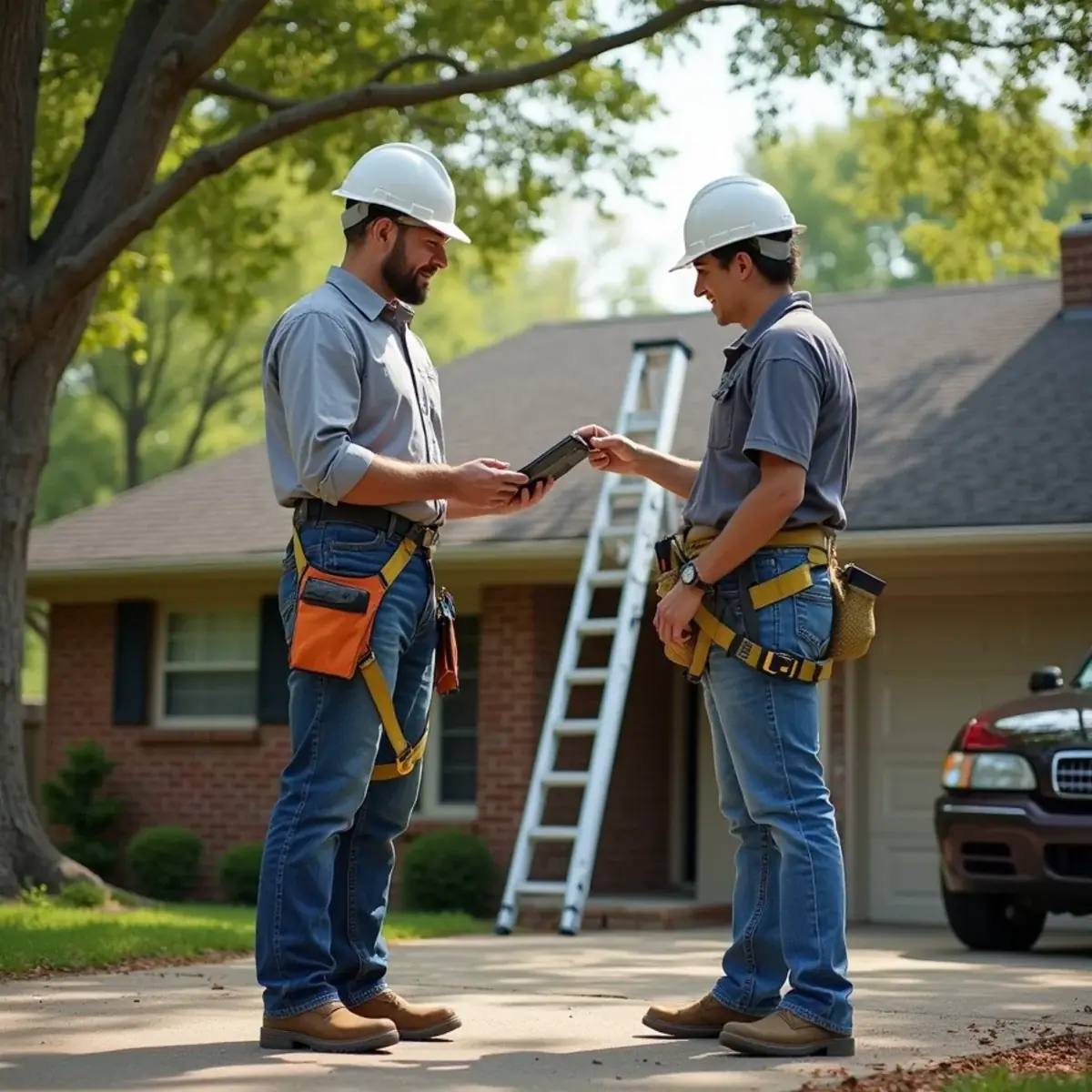
Little Rock Shingle Roofers was set up for one kind of call: the leak that shows up during a Tuesday-night downpour, the shingles lying in the yard after a windy afternoon, the brown ring that keeps growing on the bedroom ceiling. Those are small jobs to most roofing companies, and they tend to sit behind bigger projects. For us they are the whole job.
Little Rock Shingle Roofers connects you with independent licensed roofers who perform the work. We answer the phone, work out what you need and send a roofer who works your part of Little Rock, North Little Rock, Sherwood, Bryant, Maumelle, Benton or Jacksonville. The roofer finds the problem, gives you a written estimate and, once you approve it, does the repair.
Our 24/7 promise, and what it means on a roof
The line at (773) 207-0769 is answered 24 hours a day, 7 days a week, holidays included. That is a promise about answering, and we keep it. It is not a promise that someone will be on your roof in the middle of a thunderstorm. Nobody should work on a wet, steep roof in lightning, high wind or ice. When the weather is dangerous, the roofer talks you through protecting the room from inside, then gets on the roof as soon as it is safe to dry it in or tarp it. We don't quote arrival times we can't keep.
Licensed and insured in Arkansas, and easy to check
Every roofer we send is licensed and insured in Arkansas. In Arkansas, residential roofing is regulated by the Arkansas Contractors Licensing Board, and residential roofing jobs worth more than two thousand dollars in labor and materials call for a residential roofing registration or the right contractor license. You don't have to take our word for any of it:
- Ask the roofer for their Arkansas registration or license number before work starts.
- Look it up with the Contractors Licensing Board and confirm it is current.
- Check that the name on the record matches the name on your written estimate.
- Ask for proof of liability insurance and, where it applies, workers' compensation.
Who answers, and who shows up
When you call, you talk to the person who takes down the details and sends the roofer, not a sales script. The roofer who comes out is an independent contractor licensed and insured in Arkansas who repairs shingle roofs around Little Rock every week: steep pre-war roofs in Hillcrest and the Heights, hip-and-valley roofs in west Little Rock, and subdivision roofs in Sherwood and Bryant. That roofer inspects the roof, writes the estimate and does the work. You deal with them directly on the scope and the schedule, and you can check their registration or license yourself before anything is signed.
How we hold roofers to a standard you can check
We don't ask you to trust a badge. Each standard below is something you can see on the day the roofer comes out, and if one is missing you can stop before anything is signed.
- Licensed and insured in Arkansas. Ask for the registration or license number, then look it up with the Arkansas Contractors Licensing Board.
- A written estimate before work starts. If soft decking turns up once the shingles come off, that change is explained and approved before it is done.
- Photos of the problem. You see the cracked boot or lifted flashing, not just a description shouted down from the ladder.
- Repair first. The roofer fixes the part that failed.
- No climbing in lightning. Nobody goes up in lightning, high wind or ice.
A roofer who won't show a license number or pushes you to sign on the spot is a reason to pause, whoever sent them.
How dispatch works
When you call, we ask a few quick questions: where the house is, what you see inside and outside, whether water is coming in right now and whether anything is sagging or close to wiring. The answers tell us how urgent the call is and what the roofer should bring, whether that is a pipe boot, a bundle of shingles to match or a roll of tarp and a few 2x4s.
Active leaks into living space and open roofs go first. Missing shingles, lifted ridge caps and slow stains are booked at a time that suits you. On site, the roofer traces the leak from the attic where it can be reached and from the roof, photographs what failed and writes the estimate. A tarp or temporary dry-in is priced on its own line, separate from the permanent repair.
Repair first
Most Little Rock houses were built around 1978 and are on their second or third roof, so plenty of roofs here are older than their owners would like. Age alone doesn't mean a roof is finished. A cracked pipe boot, a run of tired step flashing or a few blown-off tabs is a repair, and that is what the roofer recommends. When the shingles are brittle across every slope or the leaks keep moving, the roofer tells you that too, with photos, so the bigger decision is yours to make on evidence.
What we fix, and what we send elsewhere
The roofers we send handle a short list: leaks, missing and damaged shingles, flashing and chimney leak repair, rotted roof decking repair and emergency roof tarping when part of the roof is open. Keeping the list short means the roofer shows up with a pipe boot, a bundle of matching shingles, step flashing or a tarp, not a sales binder.
Some calls aren't a repair. Hail, storm damage, full roof replacement and insurance claims are handled by our sister site, shingleroofinglittlerockar.link, so this one can stay focused on fixing what failed. If you call about one of those, we tell you so.