Call (773) 207-0769 if water is coming into your house right now: someone answers at any hour, takes down what is happening and lines up a licensed roofer for emergency roof repair in Little Rock. The first visit has one goal, keeping more water out, and the lasting repair follows once the roof is dry enough to do it properly.
Most emergency calls here come during heavy spring rain or after a limb falls from one of the big oaks and pines that shade older neighborhoods. The phone is answered 24/7, but no roofer climbs in lightning, high wind or on ice, and nobody can promise an arrival time when weather and open calls decide it. There is still plenty you can do from inside while you wait.
What counts as a roofing emergency
A roof problem is an emergency when water or weather is getting into the house now, or when something could fall on someone.
Call tonight
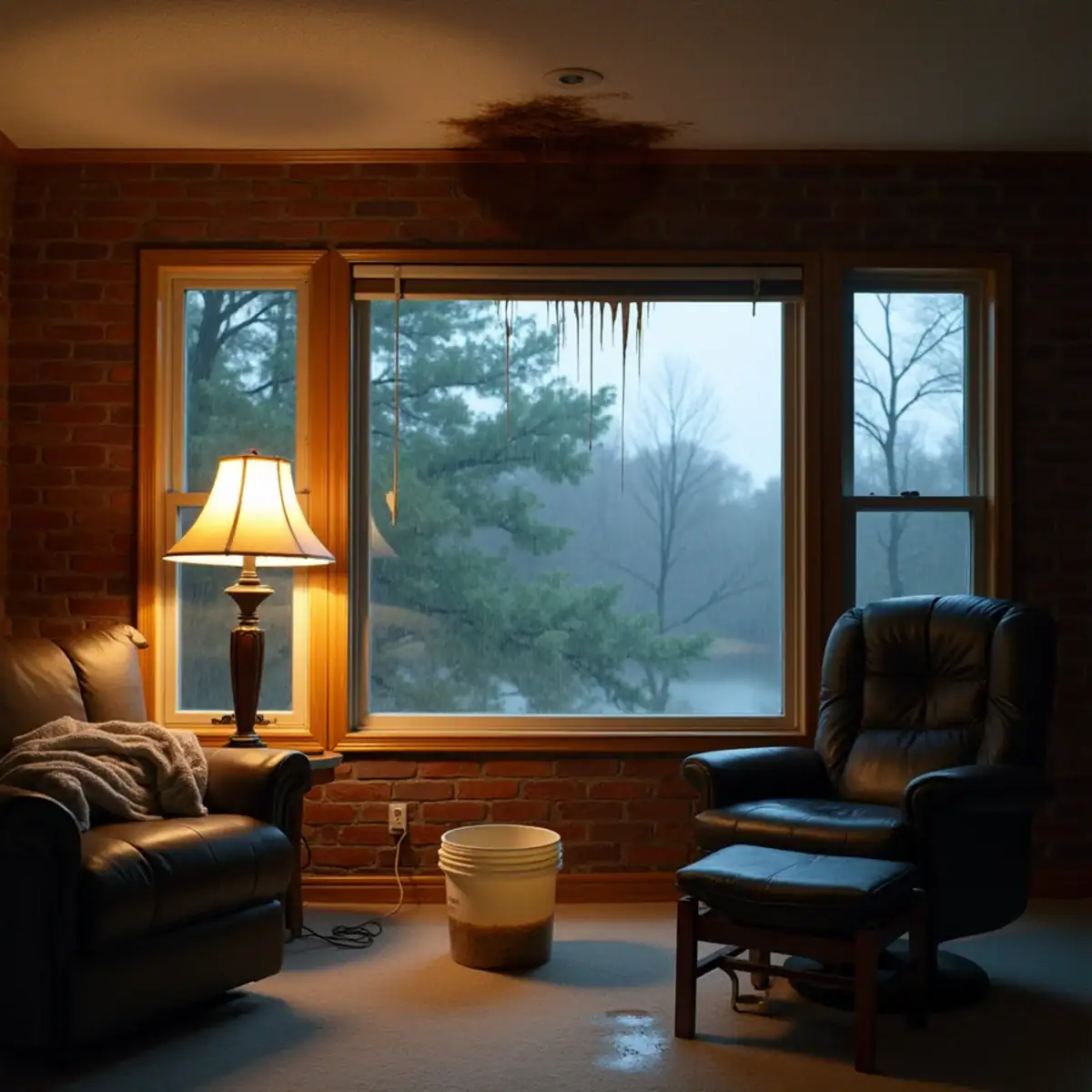
- Water dripping or streaming through a ceiling, wall or light fixture
- A ceiling that is sagging, bulging or cracking under trapped water
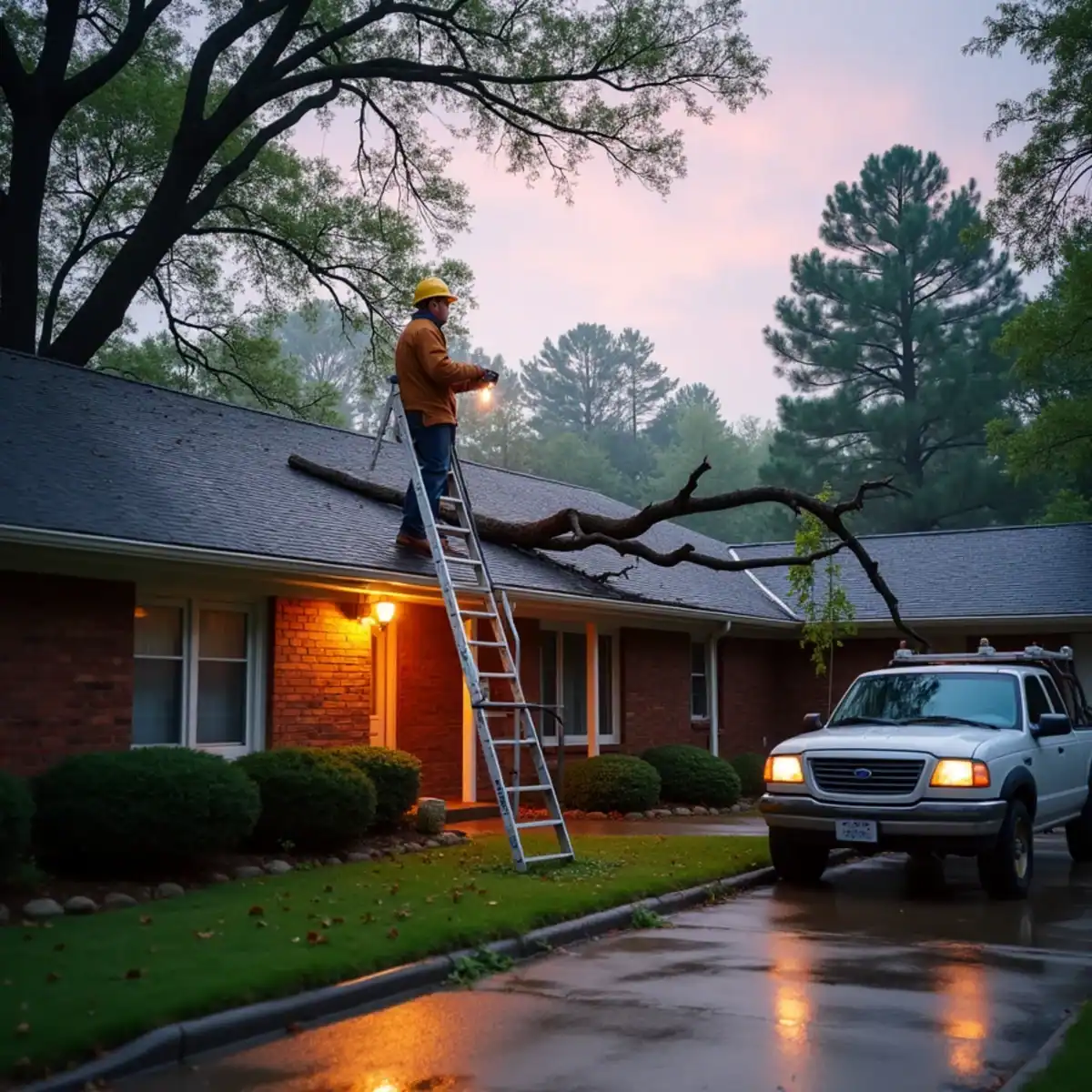
- A limb or tree resting on or through the roof
- An open hole, or bare decking where shingles have gone, with more rain forecast
- Water anywhere near the breaker panel, outlets or wiring
Usually fine to schedule
- A few missing shingles during a dry week
- An old ceiling stain that is not growing
- A lifted tab or loose ridge cap spotted from the yard
Not sure which list you are on? Call anyway. The person who answers will tell you plainly whether it sounds like a problem for tonight or a missing shingle repair that can be booked later in the week.
What an emergency roof repair visit includes
The emergency visit has a short list of jobs: stop the water, make the roof safe and document what happened. It typically covers:
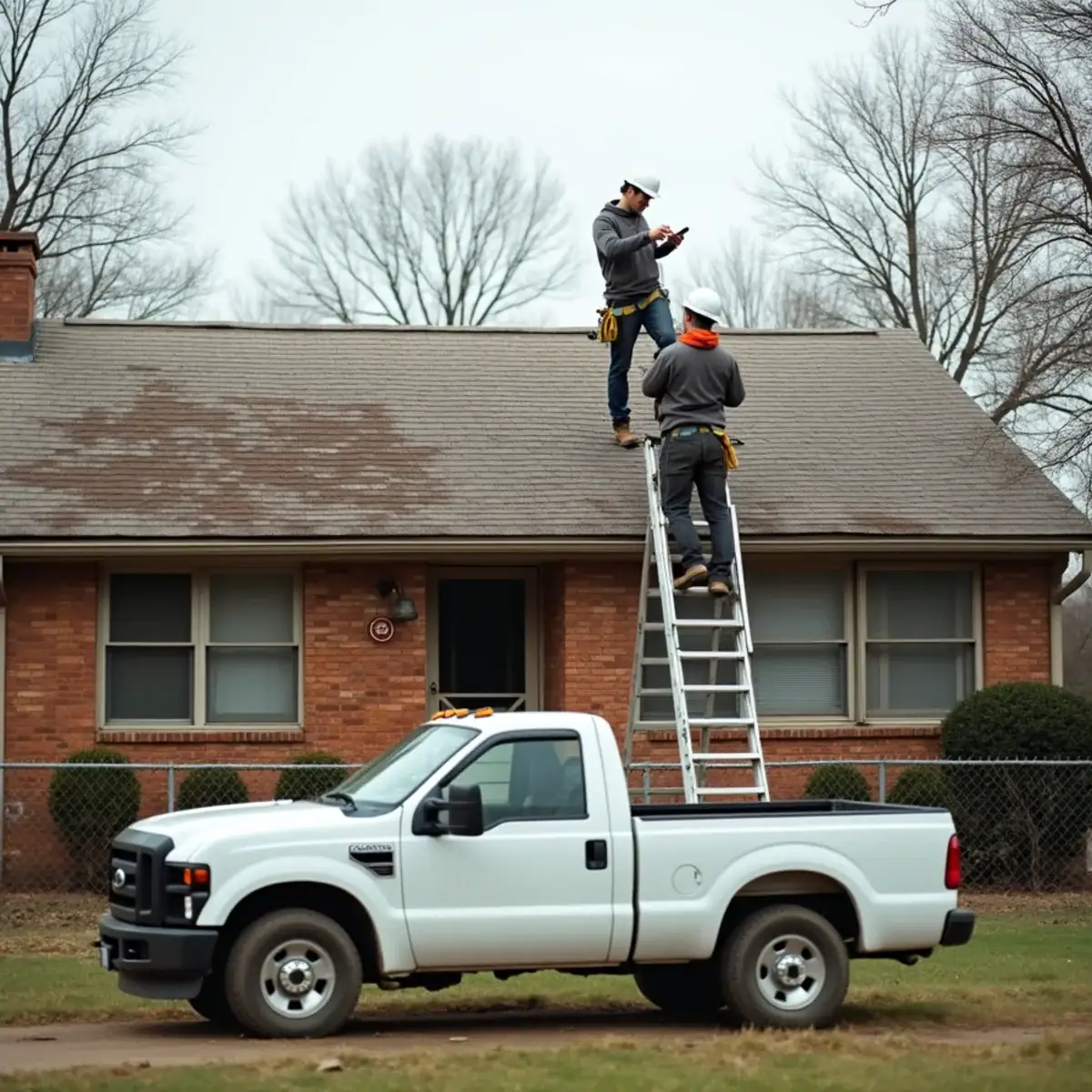
- A look at the roof, attic and ceiling before anyone climbs, including soft decking around a limb strike
- Leak tracing from the attic while weather keeps the roofer off the roof, where that is safe
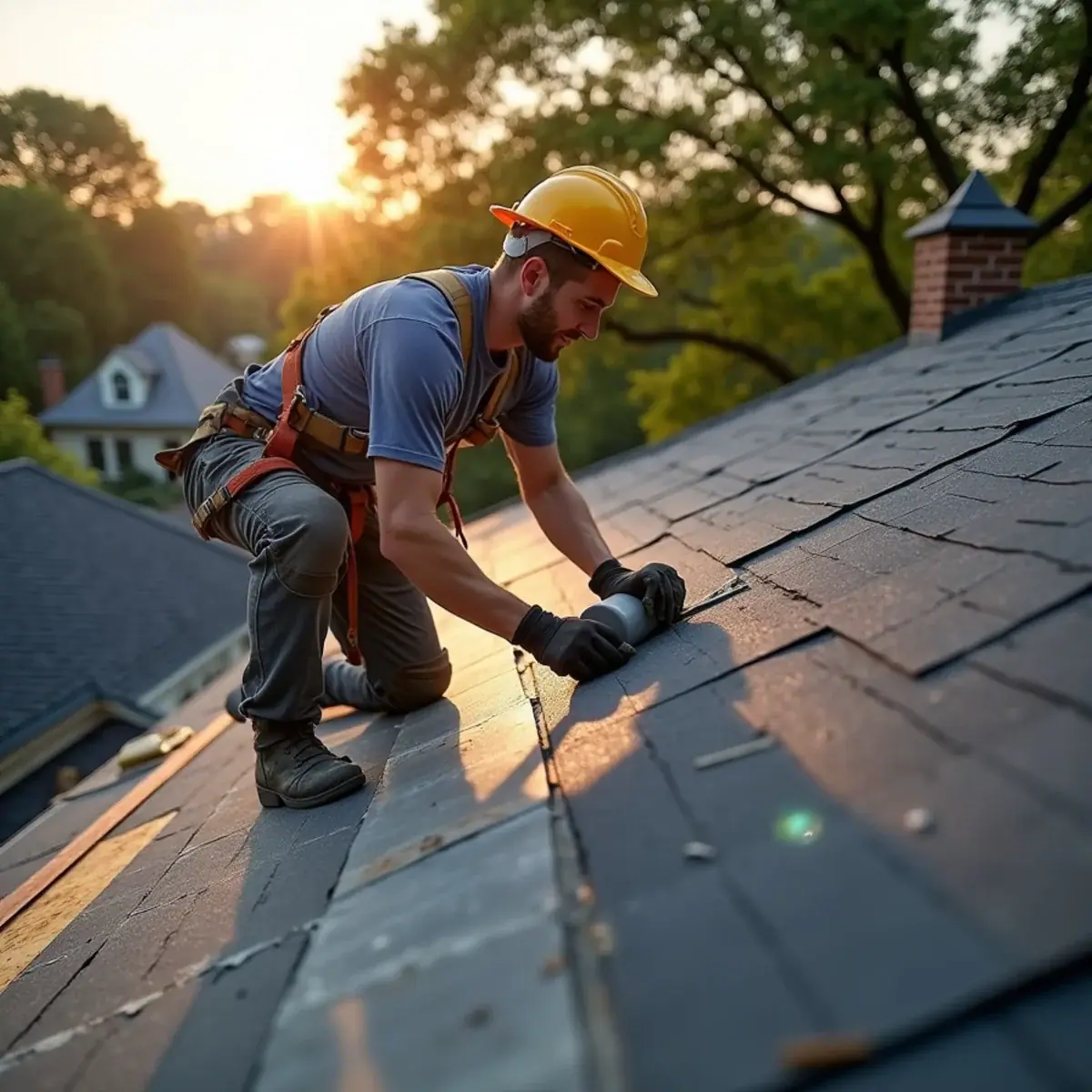
- Plywood over open holes so a tarp cannot sag and hold water
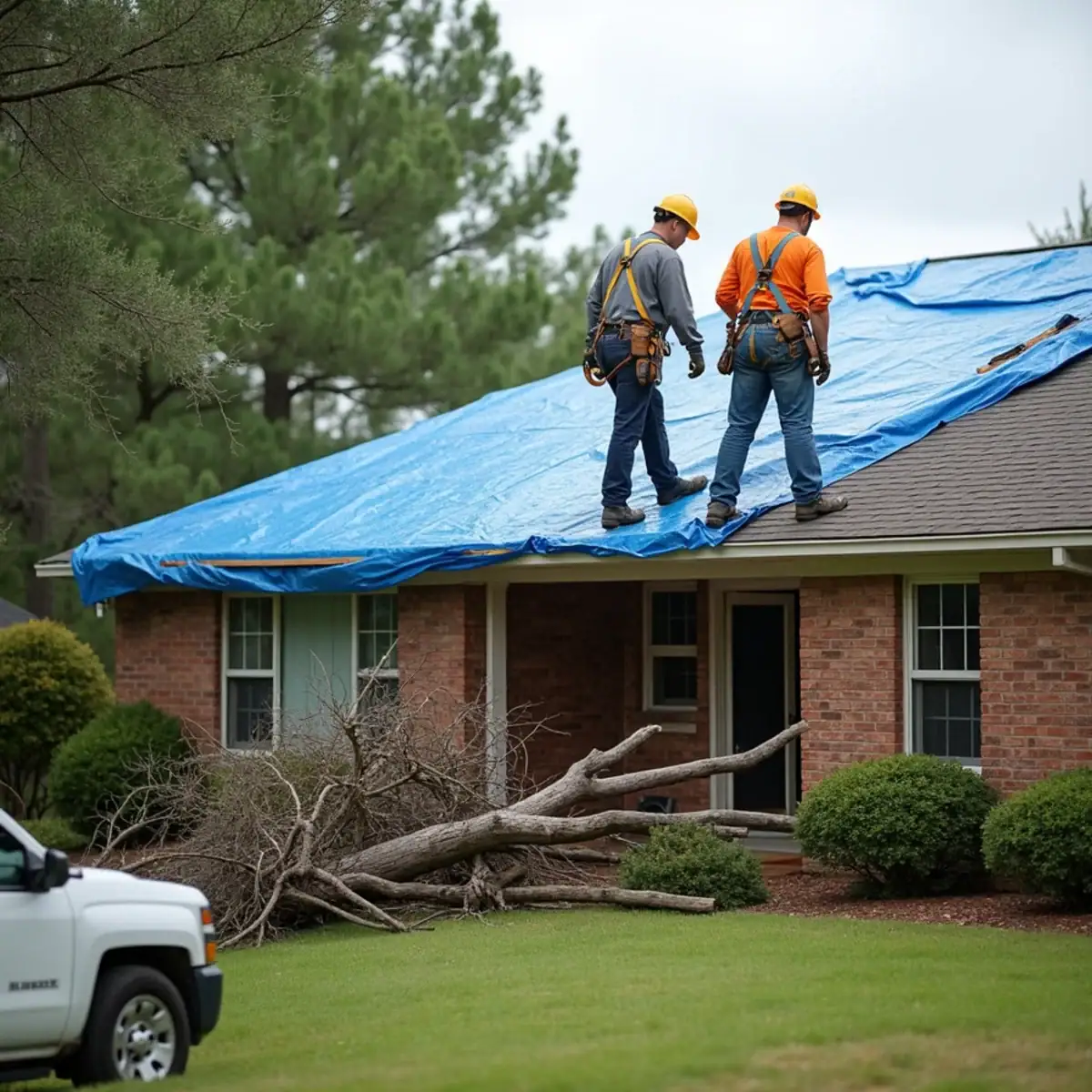
- A tarp over the ridge with 2x4 anchor boards, or membrane over bare decking once it is dry
- Loose shingles and flashing fastened down so the next gust does not take more
- Photos of the damage and the temporary work, with a short written note
- A written estimate for the emergency work, and a plan for the permanent repair
From your call to the permanent repair
Here is the order things happen in, so you know where you are on a long night.
- Make the house safeCut power to wet fixtures, catch the water, keep people out from under a bulging ceiling and stay off the roof.
- Call any hourA person answers, asks what is happening and lines up the nearest available licensed roofer, with an honest idea of timing.
- Roofer arrives when it is safeOnce lightning and high wind have passed, the roofer checks the damage and gives you a written estimate before starting.
- Water stoppedThe opening is covered with plywood, a tarp with anchor boards or a membrane, or repaired outright if the damage is small and the weather is dry.
- Permanent repair scheduledWhen the roof is dry, the roofer returns to replace shingles, flashing or decking, with that work priced in writing before the cover comes off.
Active leaks, open holes, limb strikes and missing sections
Active leaks
Most after-hours calls are leaks during a downpour. Water usually enters uphill of the drip: at a cracked pipe boot, around a chimney on an older Hillcrest or Heights house, or in a leaf-clogged valley on a west Little Rock hip roof. The roofer finds the entry point and seals or covers it; the full fix is a scheduled roof leak repair.
Limb strikes and open holes
Oak and pine limbs can punch through shingles and decking. If a heavy limb or a whole tree is on the house, a tree service takes the weight off first. The roofer then checks the decking and framing and closes the opening, often with plywood under a tarp.
Missing sections
When a gust peels away a run of shingles and underlayment, bare wood soaks up the next rain fast. A tarp or membrane over that area buys time until new shingles go on. Our emergency roof tarping page shows how a tarp is anchored so it holds.
Trees, limbs and power lines: who to call, and in what order
A tree on the house can involve three trades, and the order matters more than speed.
| What you see | Call first | Then |
|---|---|---|
| A wire down in the yard, or tangled in the fallen limb | 911 if anything sparks or burns, then the electric company | The roofer, once the line is made safe |
| A whole tree or a heavy limb resting on the house | A tree service, to lift the weight off, sometimes with a crane | The roofer, to check the framing and close the opening |
| A small limb on the shingles, no wires near it | The roofer, who can usually lift it off and cover the damage | A tree service later, for the rest of it |
Leave the chainsaw in the shed
Cutting a loaded limb on a roof can make it roll, swing toward you or drop through the decking. Entergy Arkansas, the utility for most of Little Rock, says to treat every downed line as live, even when it isn't sparking, and to leave limbs touching a line to utility crews. North Little Rock has its own city electric department.
What to do before the roofer arrives: water, electricity, photos, staying off the roof
- Switch off power to anything wet. Flip the breaker for a dripping light, fan or outlet. If the panel or the floor around it is wet, keep away and call your electric company.
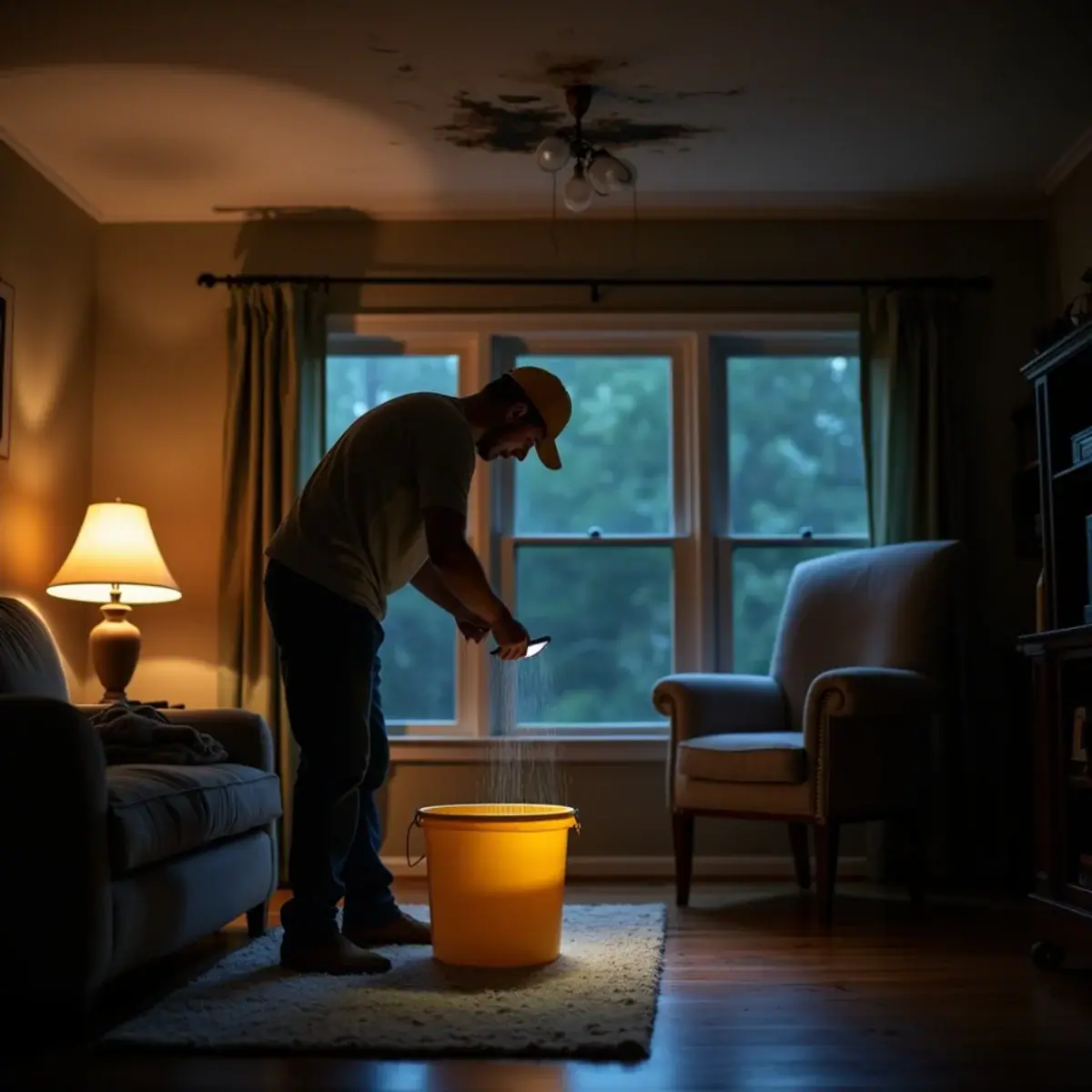
- Catch the water. Buckets, pots and towels under each drip. Move rugs, electronics and furniture out of the way.
- Ease a bulging ceiling. With a bucket below and standing to one side, poke a small hole at the lowest point so the water drains instead of dropping the drywall. Keep everyone out if it looks ready to fall.
- Photograph everything wet before you clean up, and note the time the leak started.
- Stay off the roof and the ladder. Wet shingles are slick at any pitch, and decking around a limb strike may not hold your weight.
- Make access easy. Open the gate, turn on outside lights and move cars from the damaged side of the house.
Our guide on what to do when your roof is leaking has more detail.
Before you dial: five details that get the right roofer sent
Having these five details ready shortens the call and helps the roofer bring the right materials the first time:
- The address and nearest cross street, plus anything about access: a gate code, a locked side gate, a dog in the yard.
- Where the water shows inside: which room, which floor, and whether it is a drip, a steady stream or a bulging ceiling.
- Whether water is near anything electrical: a light fixture, ceiling fan, outlet or the breaker panel. That changes what you are told to do before anyone arrives.
- What you can see from the yard: a limb on the roof, bare wood, shingles on the lawn, or nothing at all.
- The house itself: one story or two, and roughly how steep the roof is, which decides the ladder and safety gear.
Photos of the room, and of the roof from the ground, help the roofer decide whether to bring plywood, a tarp or membrane on the first trip.
How 24/7 dispatch works: live answer, nearest roofer, estimate before work
- A person answers. Day or night, someone asks where water is coming in, whether a limb is involved and the address.
- The nearest available roofer is lined up. That could be a roofer working in Little Rock or one closer to you in a nearby city; our service areas page lists where we send roofers. Every roofer we send is licensed and insured in Arkansas.
- You get honest timing. You hear the roofer's best estimate, which depends on the hour, the weather and how many calls are open. Call back any time for an update.
- Estimate before work. The roofer looks at the damage and gives you a written estimate for the emergency work, including any after-hours charge. You decide whether to go ahead.
- Water stopped, next step explained. The roofer covers or seals the problem and tells you what the permanent repair involves.
Little Rock Shingle Roofers connects you with independent licensed roofers who perform the work.
Temporary dry-in vs permanent repair on the same visit
Sometimes the emergency visit is also the repair. More often it takes two trips.
When it can be fixed on the spot
If the weather is dry and the damage is small, such as a few blown-off shingles, a lifted flashing piece or a cracked pipe boot, the roofer may be able to repair it properly on the first visit. That is real same day roof repair, and it depends on conditions and matching materials on hand.
When it has to be temporary
Wet decking, darkness, steady rain or damage that needs ordered materials all call for a temporary dry-in first:
- A heavy tarp over the ridge, held with 2x4 anchor boards
- Self-adhered membrane over bare decking once it is dry enough to stick
- Plywood over a hole, with a tarp over the plywood
Temporary covers are meant for weeks, not seasons. If a large area got soaked, ask the roofer to check the wood during the permanent repair; wet sheathing sometimes needs roof decking repair.
Protecting the attic, insulation and drywall in the first 48 hours
Once the roof is covered, the inside has to dry before mold starts, and Little Rock humidity speeds mold up. The EPA advises drying or removing wet building materials in 24 to 48 hours.
In the attic
- From a floored, well-lit walkway, move stored boxes away from the wet area; soaked cardboard holds water against the ceiling.
- Set a container or plastic sheeting on top of the insulation under the drip.
- Step only on joists or flooring. The ceiling between joists will not hold you, wet or dry.
Wet insulation and drywall
Lightly damp fiberglass batts can sometimes dry in place. Soaked insulation, and most wet blown cellulose, usually has to come out because it packs down, keeps the drywall wet and can grow mold. Drywall that sagged or stayed wet is usually cut out, work that normally goes to a water-damage cleanup, insulation or drywall company.
When to call an electrician
Leave the circuit off and call a licensed electrician before using any light, fan or outlet that got wet, or if breakers keep tripping or you smell something hot. Water can corrode connections after the drip stops.
Nights, weekends and active weather: what roofers can safely do
Night and weekend calls are routine. Weather is the real limit: roofers do not go up in lightning, in high wind or on ice. A tarp in strong gusts acts like a sail, and an iced roof cannot be walked at all.
That still leaves useful work while the weather passes:
- Your call is logged and a roofer is ready to head out as soon as conditions clear.
- Where it is safe, the roofer can work from the attic, finding the wet spot and setting a container or plastic sheeting under it.
- You can be talked through the inside steps above over the phone.
- Once lightning moves off and the wind drops, a roofer with proper lights can often work after dark, even in light, steady rain.
Spring thunderstorms often move through in an hour or two. Ice is different: during one of Little Rock's occasional ice storms, roofs can stay unsafe for a day or more, and the work waits for the thaw.
Spring in Little Rock: why emergency calls spike from March to May
Central Arkansas gets its roughest weather in spring. From March to May, lines of thunderstorms bring heavy rain, gusty wind and tornado warnings, sometimes several nights in one week, and each line tests every weak spot on every roof in town at once.
- Downpours force water past small defects that stay dry in an ordinary shower.
- Falling limbs come down from mature oaks and pines, especially in tree-shaded neighborhoods like Hillcrest and the Heights.
- Aging roofs: with a median house built around 1978, many Little Rock homes are on their second or third set of shingles.
The March 31, 2023 tornado showed how many roofs across the metro can open up in a single evening. Ordinary spring nights are far smaller, but the pattern is the same: every call is answered, and roofers go first to water inside living space, open holes and limbs on the house. If a slow drip becomes a stream while you wait, call back so your place can move up.
What affects emergency roof repair cost
An emergency visit is priced on what the roofer finds, so it cannot be quoted accurately over the phone. These are the usual factors:
- Time of the call: some roofers add a charge for nights, weekends or holidays
- Size of the opening and how much tarp, membrane or plywood it takes
- Roof height and pitch: a steep two-story roof needs more safety setup than a single-story ranch
- Tree removal if a tree service is needed first, which is usually billed separately
- Damaged decking found under the opening
- Temporary or permanent: whether the first visit is a cover or a finished repair
- Return trips to check or re-secure a tarp after more rain
Our shingle roof repair cost guide for Little Rock explains what moves the price of the permanent fix. Keep the photos and paperwork for your records or your insurer. The roofer gives you a written estimate, after-hours charge included, before work starts.
Why Little Rock homeowners call Little Rock Shingle Roofers in an emergency
- A person answers at 3 a.m.Phones are answered 24/7, nights, weekends and holidays included. You talk to someone who takes the details and lines up a roofer.
- Licensed and insured roofersEvery roofer we send is licensed and insured in Arkansas, so the person on your roof in the dark is a professional with the right paperwork.
- The price before the workThe roofer gives a written estimate, including any after-hours charge, before touching the roof. You decide whether to go ahead.
- Straight talk about timingNobody promises an arrival time that the weather controls. You hear an honest estimate and what to do inside until the roofer gets there.
Emergency Roof Repair questions from Little Rock homeowners
Is the emergency line really answered 24 hours a day?
Yes, the phones are answered 24 hours a day, seven days a week, including nights, weekends and holidays. A person takes the details and lines up a licensed roofer. What round-the-clock answering cannot change is the weather or the clock: how soon a roofer arrives depends on the hour, the conditions and how many calls are open, and no one goes on a roof in lightning, high wind or ice.
How quickly can a roofer reach my home in Little Rock?
It depends, and we will not promise a time we cannot control. On a quiet, dry night a roofer may be able to head out fairly soon. During a spring storm line, when many homes call at once, roofers go to the worst problems first and wait for lightning and wind to pass. When you call, you hear the roofer's honest estimate, and you can call back for an update.
Does emergency roof repair cost more at night?
Not always, but it can. Some roofers charge extra for nights, weekends and holidays, and emergency work can need more setup and materials than a scheduled repair. Whatever applies, the roofer puts it in a written estimate before work starts, so the invoice holds no surprises. A temporary cover and the permanent repair are usually priced as separate jobs.
Will a roofer go on the roof while it is still storming?
No. Roofers do not climb in lightning, high wind or on ice, and you should not either. While the storm passes, a roofer can be lined up to go as soon as it clears and may be able to work from the attic to slow the water. Inside, cut power to wet fixtures, catch the drips and ease any bulging ceiling. Once lightning moves off and the wind drops, work can often start, even after dark.
A limb from a big oak is lying on my roof. What should I do first?
Get everyone out of the rooms under the limb. If a power line is down or touching the tree, stay well away and call your electric company. Do not try to cut or drag the limb off yourself, since it may be holding the damaged roof in place. Take photos from the ground, then call (773) 207-0769. A tree service lifts off large limbs before the roofer checks the decking and covers the opening.
My tenant reported a leak overnight. Can I send a roofer without being there?
Yes. Close to half of Little Rock households rent, so landlords and property managers call for tenants all the time. Give us the address, the tenant's number and the best way to reach you. The roofer arranges access with the tenant, and you get the written estimate before work starts. Our landlord roof leak checklist covers what tenants should do while they wait.
Does wet attic insulation have to be replaced after a roof leak?
Not always. Fiberglass batts that only got damp can often dry once the roof is covered and air moves through the attic. Soaked or matted insulation, and most wet blown cellulose, usually has to come out before it grows mold.
Should I call tonight or wait until morning?
Call tonight if water is reaching a living space or wiring, a ceiling is sagging, or the roof is open with rain coming. A slow drip into a bucket on a dry night can usually wait until morning. Unsure? Call anyway; someone answers at any hour.
Page reviewed by Little Rock Shingle Roofers.