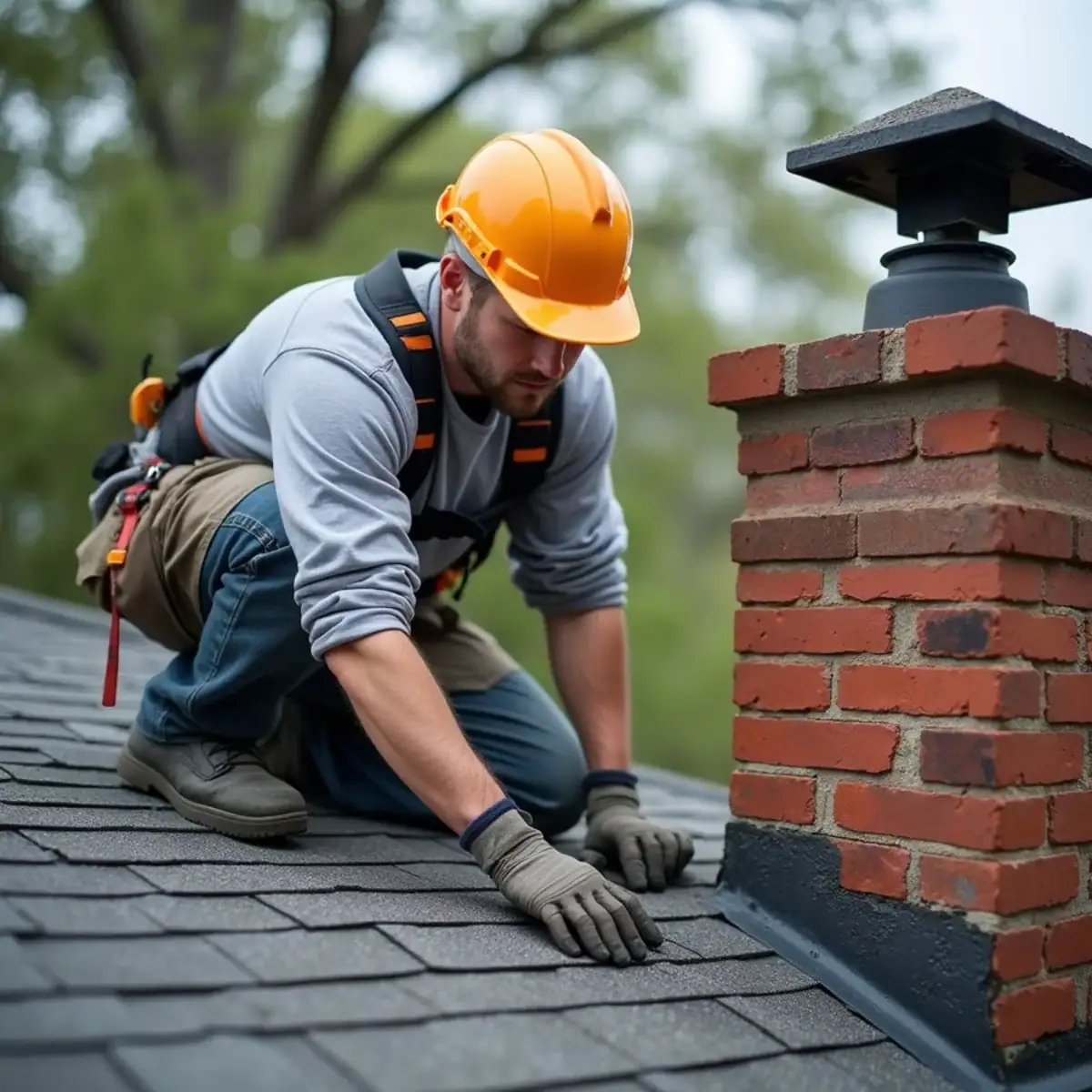
Roof flashing repair in Little Rock covers the metal and rubber pieces that seal every spot where a roof meets something else: a chimney, a wall, a vent pipe, a skylight, a valley or the roof edge. Flashing has a harder job than shingles, and it usually fails first. A brick chimney on a 1920s Hillcrest house can have flashing older than the homeowner, while the rubber vent boots on a 2005 roof in Chenal Valley may already be cracked from summer heat.
Little Rock Shingle Roofers answers 24/7 and connects you with an independent licensed roofer who finds the piece that failed, shows you photos of it and gives you a written estimate before work starts. Not sure it is the flashing? Our roof leak repair page explains how roofers trace a leak to its source.
Signs the leak is flashing, not shingles
Location is the biggest clue. Flashing leaks show up near the things that pass through or meet the roof.
- A stain on the ceiling or wall right beside the chimney, often on the fireplace wall itself.
- A ring on a bathroom or kitchen ceiling directly under a vent pipe.
- Water running down the inside of a skylight shaft, or stained drywall around it.
- A damp streak on an interior wall below the spot where a lower roof meets a second-story wall.
- Rust streaks on the shingles below a chimney or a metal vent.
- Gaps, cracked caulk or lifted metal you can spot with binoculars from the yard.
Flashing leaks also follow the weather. A chimney that leaks only when rain blows from one direction usually points to metal that is loose or lapped the wrong way.
That said, a water stain on the ceiling can come from plumbing or attic condensation too, so the roofer checks the attic before deciding the flashing is to blame.
What a flashing repair visit includes
Flashing work starts with finding the exact piece that failed. Here is what the roofer we send covers on the visit.
- A look at the stain or drip inside, and the attic above it where it can be reached safely.
- A close inspection of the chimney, pipe boots, skylight curbs, wall junctions, valleys and drip edge near the leak.
- Removal of old tar and caulk patches so the real condition of the metal is visible.
- Photos of the failed flashing, plus any cracked mortar or crown the roofer spots for a mason.
- New step, counter, valley or kick-out flashing as needed, lapped so it sheds water.
- New pipe boots where the rubber has cracked, and a check of every other boot on the roof.
- A written estimate approved before work starts, listing anything that could change once old metal comes off.
How a flashing repair is handled
Most flashing jobs are finished in one visit. A full chimney reflash can take longer.
- Call and describe the leakSomeone answers 24/7. Tell us where the water shows and what sits above it on the roof: a chimney, a vent pipe, a skylight or a wall.
- Pinpoint the failed pieceThe independent licensed roofer we connect you with checks the attic and the roof, and if needed runs a hose on one flashing at a time until the drip appears.
- Photos and a written estimateYou see the cracked boot or loose counter flashing in photos and get a written estimate. Work starts only after you approve it.
- Rebuild, don't smearThe roofer lifts the shingles, removes the failed metal, installs new flashing in the right order and lays the shingles back. Old caulk patches come off instead of getting another layer.
- Check after a soaking rainWatch the old stain through the next long rain. If it stays dry, the flashing is doing its job. If anything shows, call and the same area gets rechecked.
Chimney flashing: step, counter and cricket repairs
A flashed chimney has layers that work together. When one fails, water gets behind the others.
Step flashing
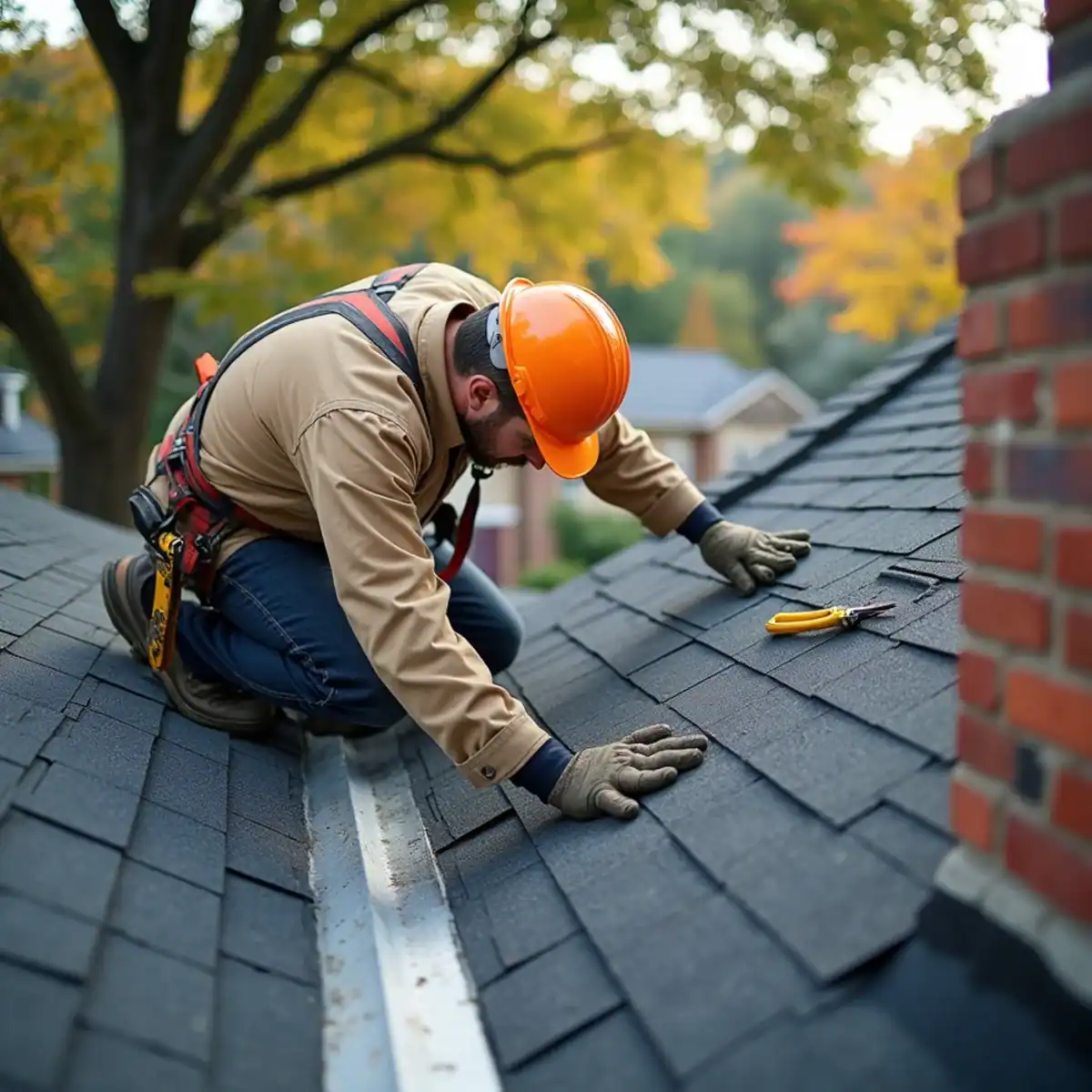
Step flashing is a series of L-shaped pieces woven in with each course of shingles along the sides of the chimney. Each piece overlaps the one below, so water steps down and out. A single long strip against the brick, common on old repairs, funnels water into the joint.
Counter flashing
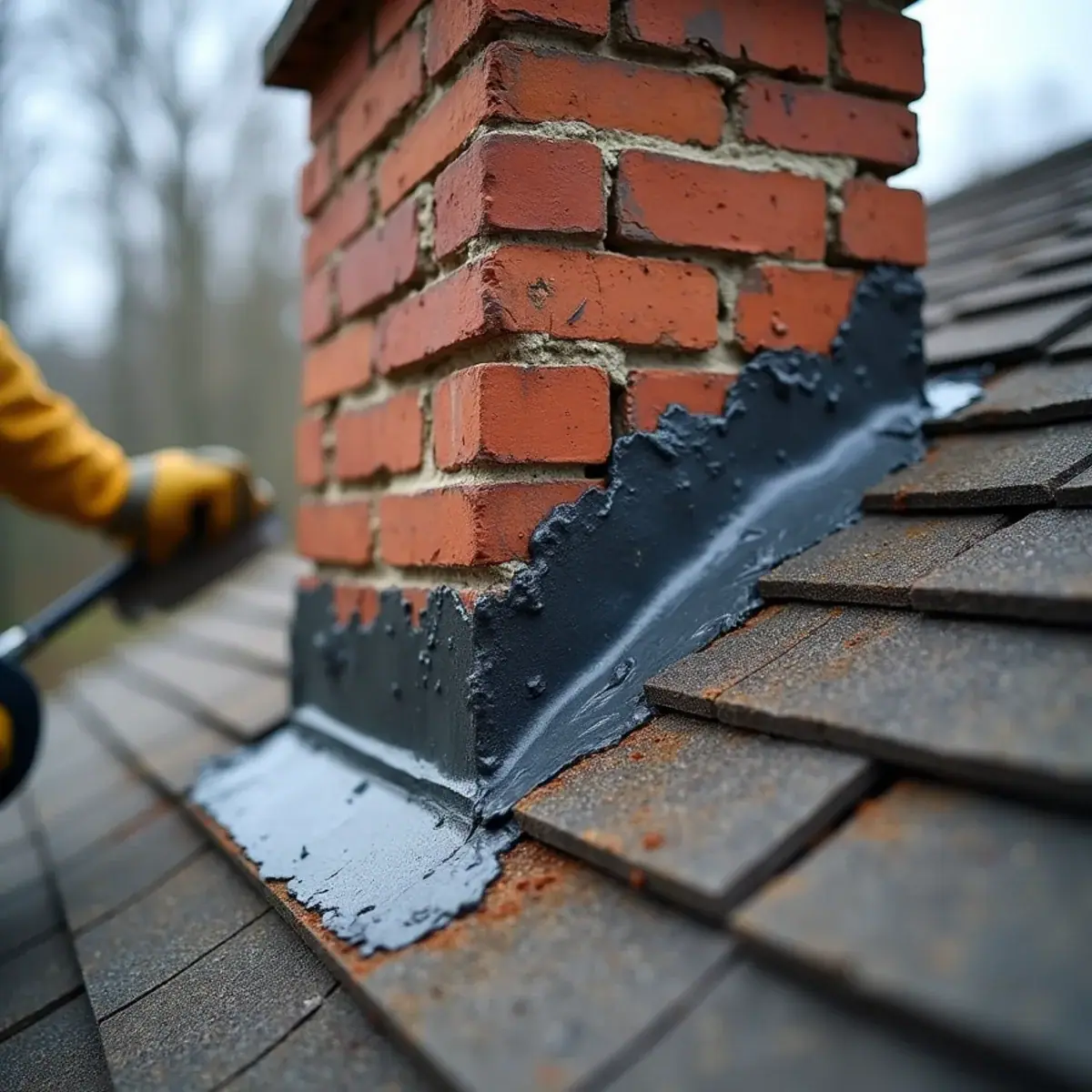
Counter flashing covers the top edge of the step flashing. Done right, it is set into a groove cut in a mortar joint and bent down over the steps. On many older chimneys it is simply glued to the face of the brick with caulk, which dries out and lets go after a few summers.
Roofers call that groove a reglet. Surface-mounted counter flashing is screwed to the brick face instead and relies on a sealant bead along its top that needs regular recaulking.
Crickets
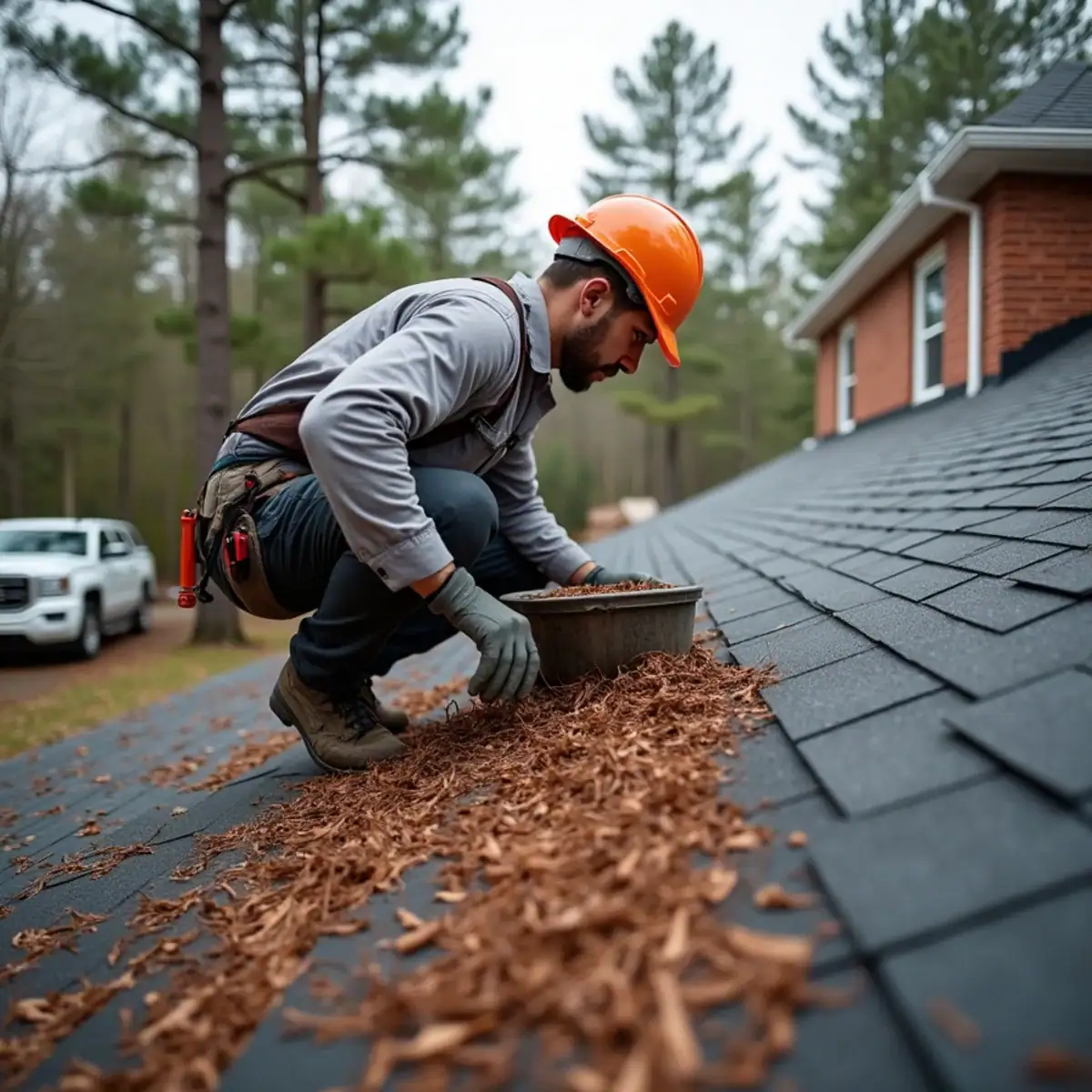
A cricket is a small peaked roof built on the uphill side of a chimney to split water around it. Wide chimneys usually need one. Without it, leaves and water pile up behind the chimney and work under the flashing.
Chimney flashing repair fixes whichever of these has failed. Cracked mortar, a broken crown or flaking brick get photographed and pointed out, since that part is masonry work. See chimney leaks in older Little Rock homes.
Flashing leak or masonry leak? Clues at the chimney
Where the water shows tells the roofer which of three levels is leaking: the flashing, the brick and mortar, or the crown and cap.
| What you notice | Where it usually starts | Who fixes it |
|---|---|---|
| Stain on the ceiling or wall beside the chimney, near the roofline, worst in hard or wind-driven rain | Step or counter flashing | Roofer |
| Water in the firebox, a rusty damper or drips inside the flue | Cracked crown, missing cap or open flue top | Mason or chimney sweep |
| White powdery deposits on the brick in the attic, or brick that stays dark for days | Porous brick or open mortar joints | Mason |
When the clues are mixed, the roofer water-tests in stages: the flashing alone, then the brick, then the crown. Pre-war chimneys in Hillcrest and the Quapaw Quarter often have soft old mortar, and when the joints can't hold a reglet cut, a mason repoints them before the roofer flashes.
Pipe boots and vent collars: the most common small leak
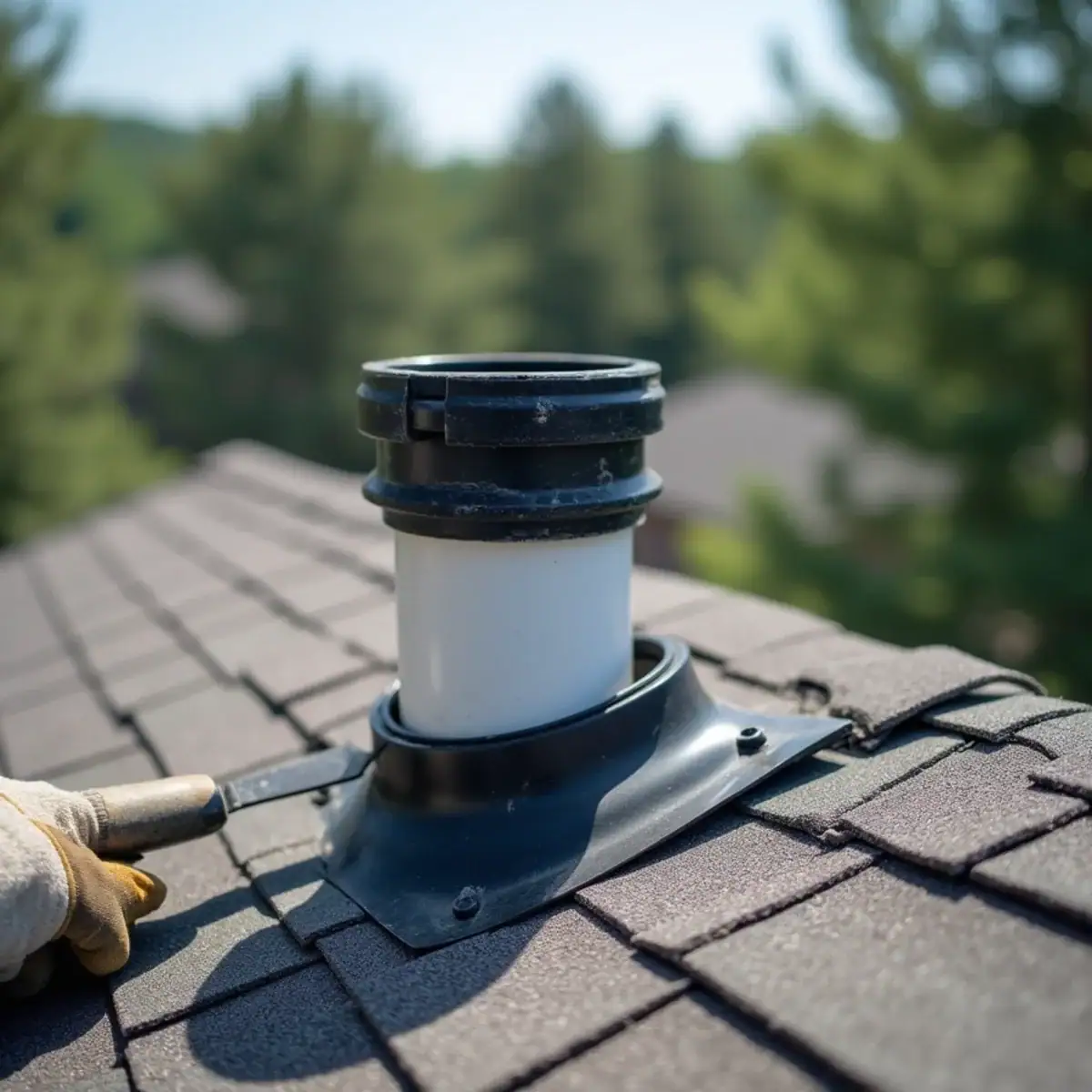
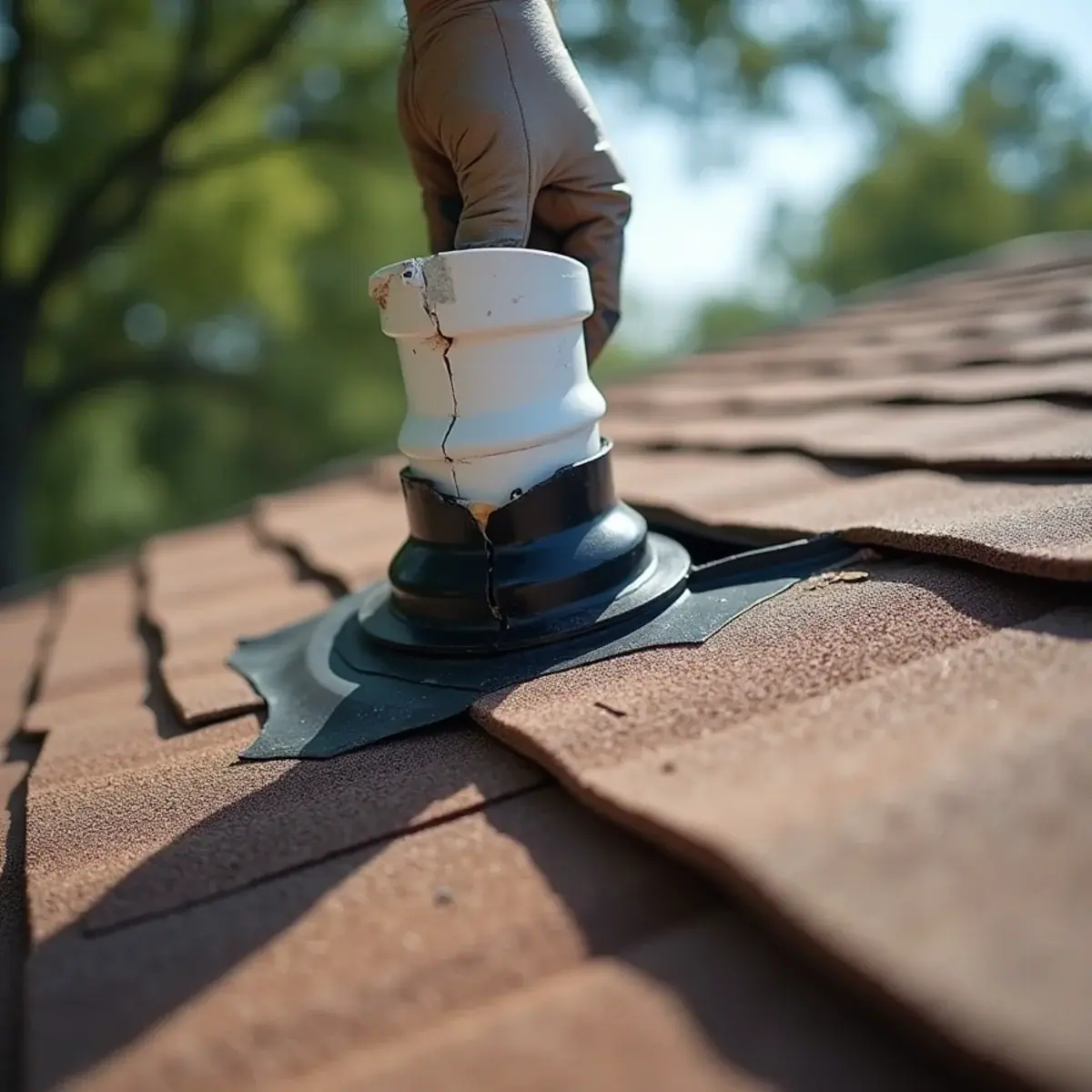
Count the pipes on your roof. Each plumbing vent passes through a boot that seals it to the shingles, and furnace or water heater flues have their own collars. A standard boot has a metal or plastic base and a rubber collar that hugs the pipe. In Little Rock's summer heat that rubber hardens, shrinks and cracks, often in 10 to 15 years, and sooner on a south-facing slope.
A vent boot leak usually shows up as a small ring on the ceiling below, often in a bathroom. The fix is straightforward:
- The roofer lifts the shingles above the old boot and pulls it off the pipe.
- A new boot slides over the pipe, its base tucked under the shingles above and lying over the ones below.
- The boot is nailed where the shingles will cover the nails, then the shingles are laid back and sealed.
Pipe boot replacement is quick, so the roofer usually checks every boot on the roof while up there. Boots installed at the same time tend to fail together. More in our guide to pipe boot leaks.
Skylight leaks and curb flashing
A skylight rarely leaks through the glass. The water usually comes in at the flashing around the curb, the raised frame the skylight sits on.
- Step flashing on the sides has the same job as on a chimney, and fails the same ways.
- Head flashing on the uphill side catches leaves and pine needles, which hold water against the curb.
- The apron on the downhill side can get bent or lifted, so water runs back underneath it.
- Old sealant around a deck-mounted skylight dries out and cracks in the heat.
Condensation can also run down a skylight shaft on cold mornings and look exactly like a leak, so the roofer checks whether the water appears only after rain. Skylight leak repair usually means new flashing around the existing unit. If the frame is cracked or the glass seal has failed, the roofer explains your options for the skylight itself before you decide anything.
Valleys, wall junctions and drip edge
Valley flashing
Open valleys use a channel of metal down the center. Closed valleys rely on shingles woven or cut over underlayment. Valley flashing that is too narrow, rusted through or dented lets water spill under the shingles in a downpour, especially when oak leaves and pine needles dam the flow. See why roof valleys leak.
Wall junctions and kick-out flashing
Where a lower roof meets a wall, step flashing runs up behind the siding. At the bottom, a kick-out flashing turns the water into the gutter. When the kick-out is missing, water runs behind the siding and rots the wall. The hip-and-valley homes of west Little Rock and Chenal Valley have many of these roof-to-wall joints, and each one is a place to check.
Drip edge
The metal strip along the eaves and rakes keeps water from curling back onto the fascia. Drip edge repair fixes bent, loose or rusted sections, often after a ladder or a falling limb bent them. If the fascia or deck edge behind it has gone soft, that goes on the list for roof decking repair.
Roof-to-wall flashing on brick, siding and fiber cement
Along the side of a wall, a roof is sealed with step flashing. Where a roof slopes into the base of a wall, such as a porch roof under upstairs windows, it gets apron flashing: one long bent piece, roof leg over the top shingle course, wall leg turned up behind the cladding.
Siding and fiber cement
Siding and house wrap lap over the flashing, never behind it, and the siding should stop about an inch above the shingles. Siding run down onto the roof wicks water.
Brick veneer
On Little Rock's many brick-veneer ranches, step flashing along a brick wall needs counter flashing cut into a mortar joint. A strip caulked to the brick face is the usual shortcut, and the usual leak.
When the kick-out is missing
Swollen trim, peeling paint or soft siding at the lower end of a roof-to-wall joint mean water is running into the wall, and vinyl, fiber cement and brick can hide wet framing for years. The new kick-out goes in as the first piece of the run, fastened to the roof.
Older Little Rock homes: masonry chimneys and steep, cut-up roofs
The pre-war neighborhoods near downtown have the most flashing per square foot of roof. Houses in Hillcrest, the Heights and the Quapaw Quarter often have steep pitches, dormers, gables meeting gables and at least one brick chimney. Every one of those intersections is flashed, and many were last touched decades ago.
- Chimneys may still carry their original metal, patched with tar many times over, or counter flashing that someone caulked to the brick face.
- Dormers add short walls on both sides, each with its own run of step flashing to fail.
- Steep slopes mean harnesses, roof jacks and more setup.
- Board decking under the shingles in many older homes holds nails differently than plywood, so flashing gets lifted and refastened carefully.
The same kind of work turns up in older neighborhoods across our service areas around Little Rock, wherever brick chimneys and steep, cut-up roofs go together. If old shingles break as the flashing comes out, the roofer patches them as part of the job, the same way as a missing shingle repair.
Caulk is not a repair: what actually lasts
A tube of caulk stops a flashing leak for a few months. It is also the most common reason the same leak comes back. Little Rock summers heat roof metal far past the air temperature, and it grows and shrinks every day. Sealant on the face of a joint cracks and pulls away, often while still looking fine from the ground.
Flashing that lasts depends on layering, not glue:
- Laps that shed water. Every piece overlaps the one below it, so water runs over the joints and never into them.
- Metal set into the masonry. Counter flashing goes into a cut mortar joint, not onto the face of the brick.
- Fasteners in the right place. Nails sit where the next layer covers them, never through the part that carries water.
- Sealant as a backup. A bead at the top of a cut joint or around a pipe collar is fine. Sealant doing all the work is not.
Watch for tar patches
Layers of black roof cement around a chimney or vent usually mean the flashing underneath failed long ago. They can trap water and hide rot, so the roofer removes them to see what is really there.
Flashing metals, and why mixing them causes corrosion
Most flashing on Little Rock shingle roofs is galvanized steel or prefinished (painted) metal, with copper on some older homes. Each wears differently.
| Metal | Where you see it | How it wears |
|---|---|---|
| Galvanized steel | Step flashing, chimneys, valleys, drip edge | Rusts once the zinc coating wears through |
| Aluminum | Drip edge, step flashing on newer homes | Often 15 to 20 years; bare aluminum pits against mortar or concrete |
| Copper | Chimneys and valleys on older or custom homes | Often 50 years or more when fastened and isolated correctly |
Metals that can't touch
When two different metals touch and stay wet, the less noble one corrodes faster. This is galvanic corrosion, and Little Rock's humid summers keep those joints wet. Copper touching galvanized steel or aluminum, or copper runoff washing over them, eats the steel or aluminum first. Fasteners count too: copper nails for copper, galvanized or stainless for steel. In a repair, the roofer matches the metal or separates it with a membrane.
What affects the cost of a flashing repair
Flashing repairs vary more than most roof work, because what you see from the top is only part of it. The main price drivers:
- Which flashing failed. A single pipe boot is a short job. Rebuilding step and counter flashing around a chimney takes much longer.
- Chimney size and condition. A wide chimney may need a new cricket, and soft mortar makes cutting a clean groove for counter flashing harder.
- Roof pitch and layout. Steep, cut-up roofs in older neighborhoods need harnesses, roof jacks and slower shingle work.
- Shingles around the flashing. Brittle shingles next to the work may need to be swapped out as well.
- Hidden rot. Wet decking or wall sheathing found once the old metal comes off adds to the scope.
- Skylight condition. Reflashing a sound skylight is different work from dealing with one whose frame has failed.
For the bigger picture, see what shingle roof repair costs in Little Rock. The roofer gives you a written estimate before work starts.
Why Little Rock homeowners call us for flashing and chimney leaks
- Someone picks up any hourChimney leaks have a way of showing up during evening rain. The phone is answered 24/7, so you can get a roofer scheduled while the drip is still active.
- See the failed metalPhotos show the loose counter flashing, the cracked boot or the rusted valley before any work is approved, together with the written estimate.
- Repair at the sourceFlashing problems are fixed as flashing problems. A bad chimney flashing or vent boot does not mean the whole roof has to come off, and the roofer won't suggest it does.
- Licensed and insured in ArkansasEvery roofer we send is licensed and insured in Arkansas. Little Rock Shingle Roofers connects you with independent licensed roofers who perform the work.
Flashing & Chimney Leaks questions from Little Rock homeowners
Why does my chimney leak when it rains?
Usually because water is getting behind the flashing where the roof meets the brick. Common causes on Little Rock homes are counter flashing caulked to the brick face instead of set into the mortar, missing or rusted step flashing, and no cricket on the uphill side of a wide chimney. A cracked crown or porous brick can also let water in. The roofer checks each and shows you which one failed.
How long do rubber pipe boots last in Arkansas heat?
Rubber collars on standard pipe boots often crack in 10 to 15 years in Arkansas sun, and sometimes sooner on a south- or west-facing slope. That means many boots fail well before the shingles around them. If one boot on your roof has cracked, the others put on at the same time are usually close behind, so the roofer checks them all while on the roof.
Can flashing be replaced without replacing the roof?
Yes. Step flashing, counter flashing, pipe boots, valley metal and drip edge can all be renewed by lifting or removing the shingles around them, then laying those shingles back or fitting matching new ones. It is one of the most common repairs on older Little Rock roofs. The roofer will tell you if the shingles next to the work are too brittle to reuse.
Is a skylight leak the skylight or the flashing?
Usually the flashing. Most skylight leaks come from the step flashing on the sides, debris backing water up at the head flashing, or dried-out sealant around the curb. Less often, a cracked frame or failed glass seal is the cause, and condensation can drip in cold weather. The roofer checks whether the water shows only after rain and tells you which it is before quoting.
Do I need a mason or a roofer for a chimney leak?
It depends on where the water gets in. Step flashing, counter flashing and crickets are roofing work. A cracked crown, open mortar joints or flaking brick above the roofline are masonry work. Many older Hillcrest and Heights chimneys need a bit of both. The roofer checks the flashing first, photographs any masonry problems and tells you plainly what needs a mason.
Can squirrels cause a pipe boot leak?
Yes. Squirrels are everywhere in the oaks around Little Rock neighborhoods, and they sometimes chew rubber pipe collars and soft metal vent flashing. A chewed collar leaks the same way a sun-cracked one does. The roofer fits a new boot and can point out the limbs that give squirrels an easy path onto the roof, so you can have them trimmed back.
When does the building code require a chimney cricket?
Residential building code calls for a cricket when a chimney is more than 30 inches wide, measured parallel to the ridge, and does not sit at the ridge. Many wide chimneys on older Little Rock homes were built without one, and leaves and water pile up behind them. The roofer can frame and flash a cricket as part of a chimney reflash.
Will the roofer reuse my old flashing?
Not always. Flat, unrusted metal without holes, such as sound copper or reglet-set counter flashing, can sometimes be reset. Step flashing pulled from old shingles is usually bent and full of nail holes, so it gets replaced. The written estimate says which pieces stay and which are new.
Page reviewed by Little Rock Shingle Roofers.