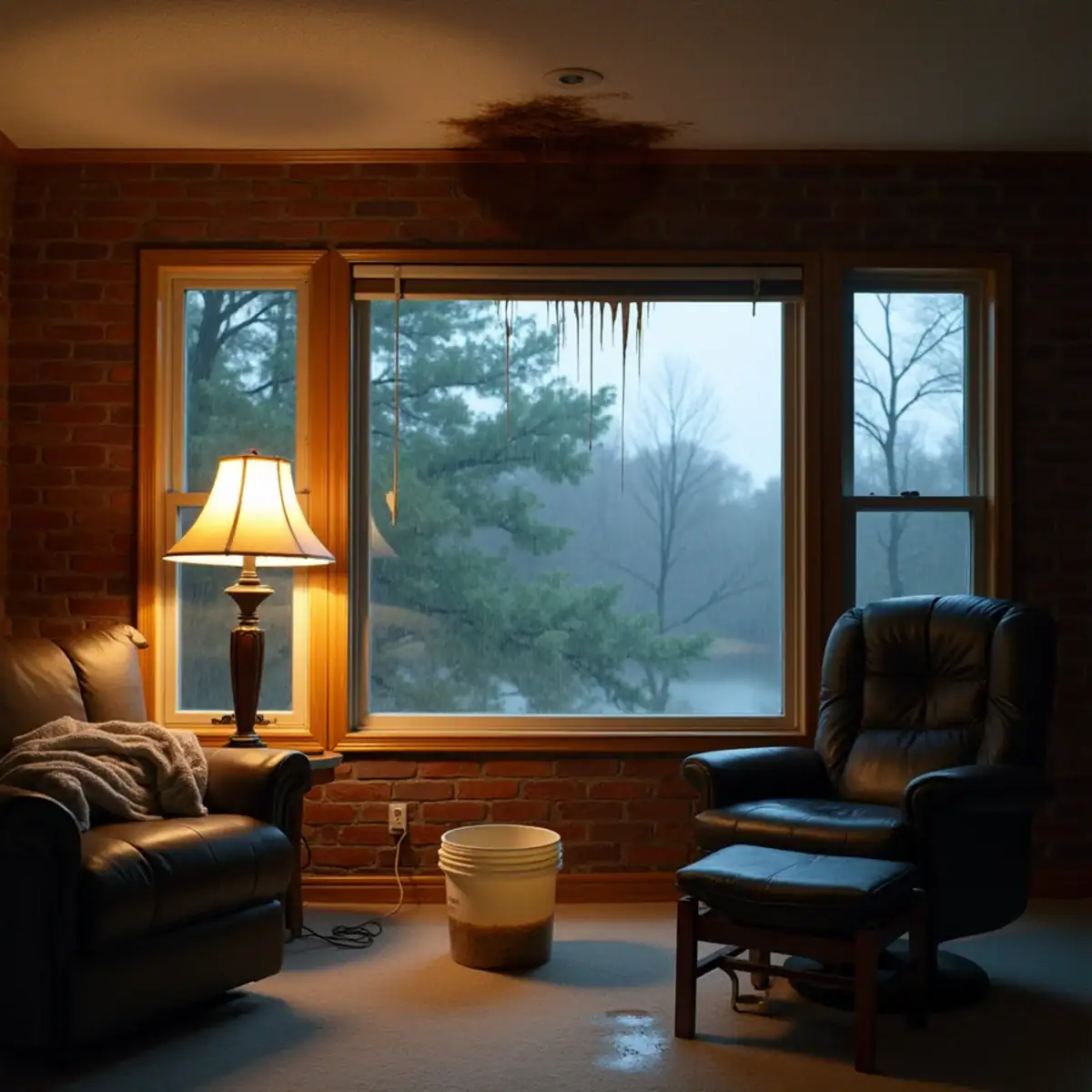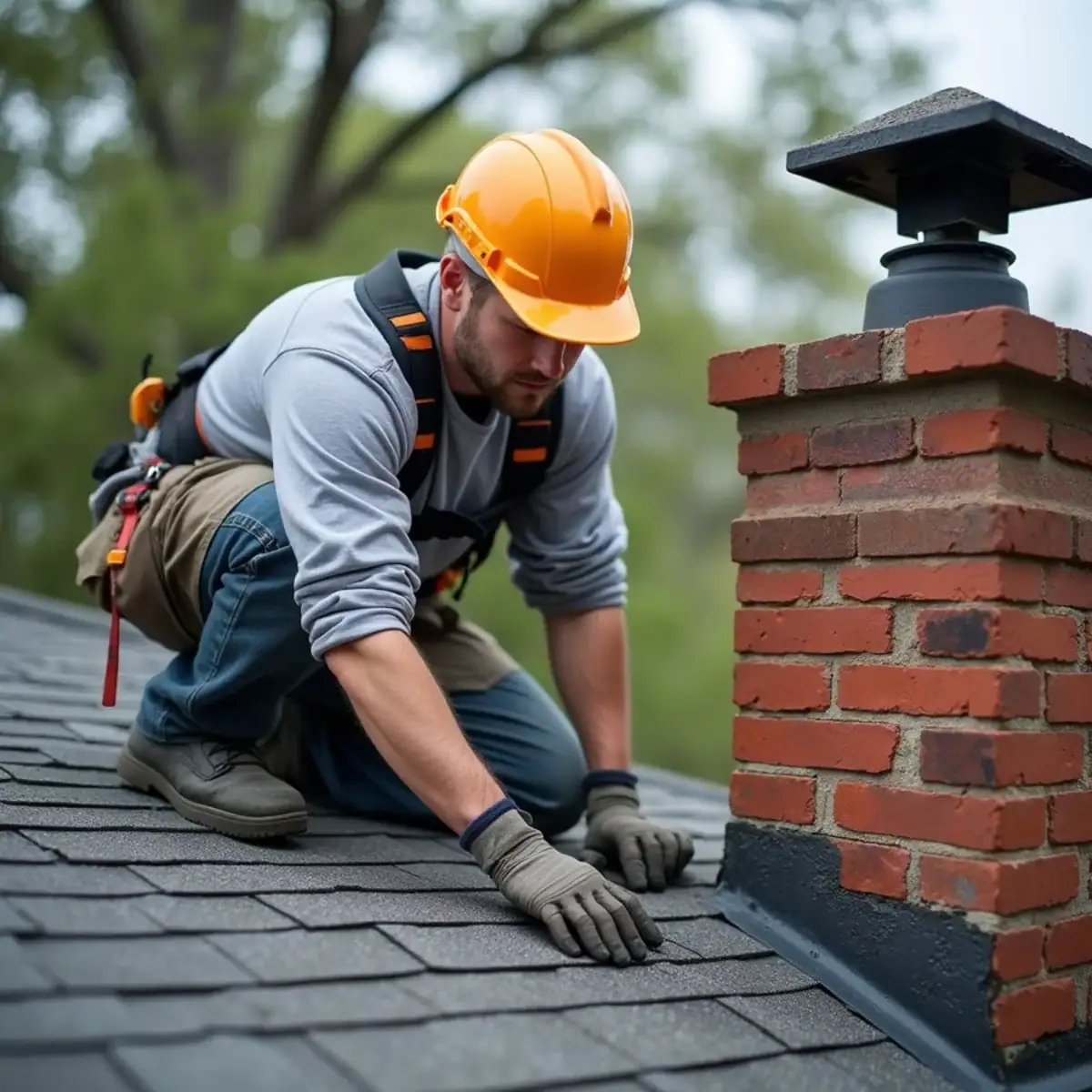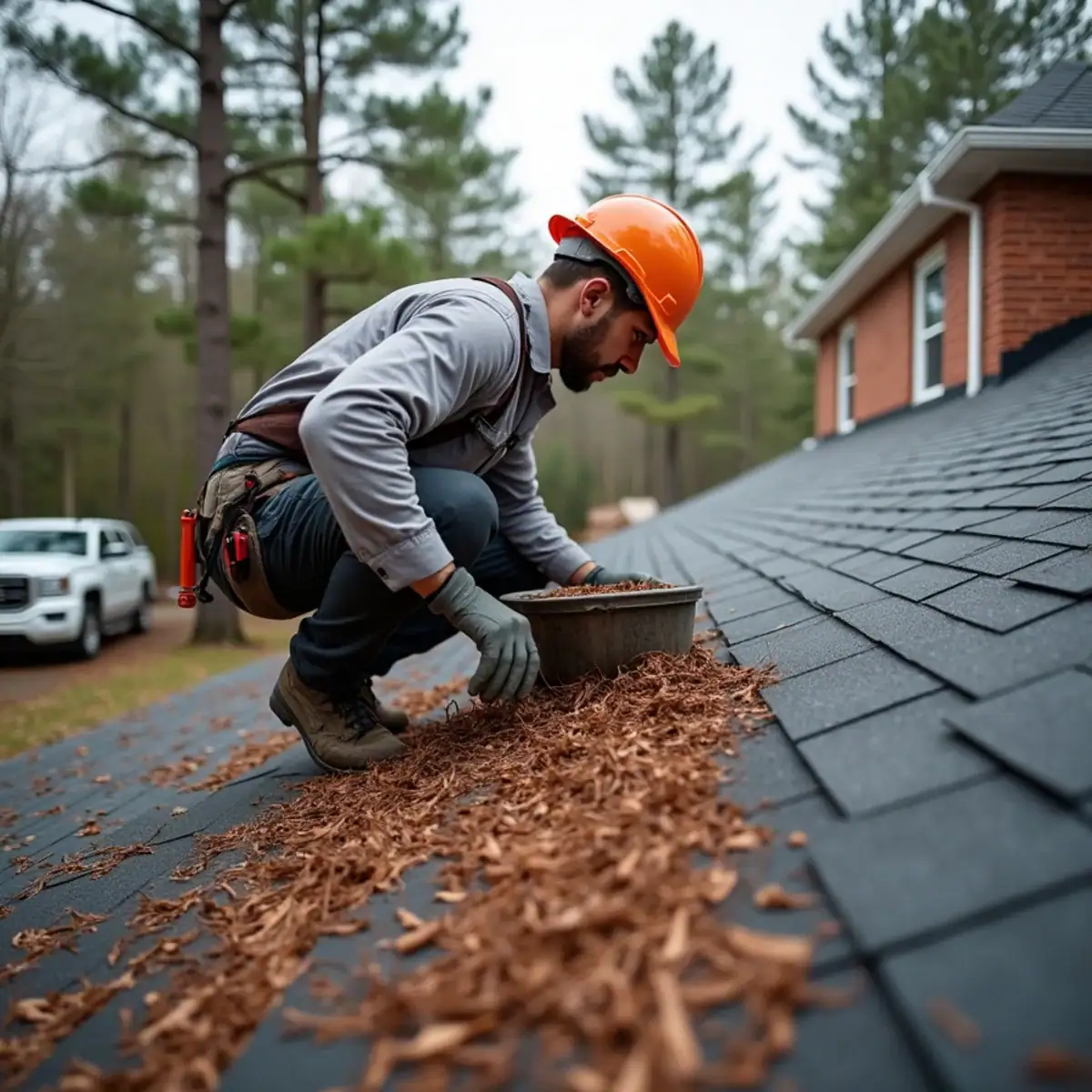
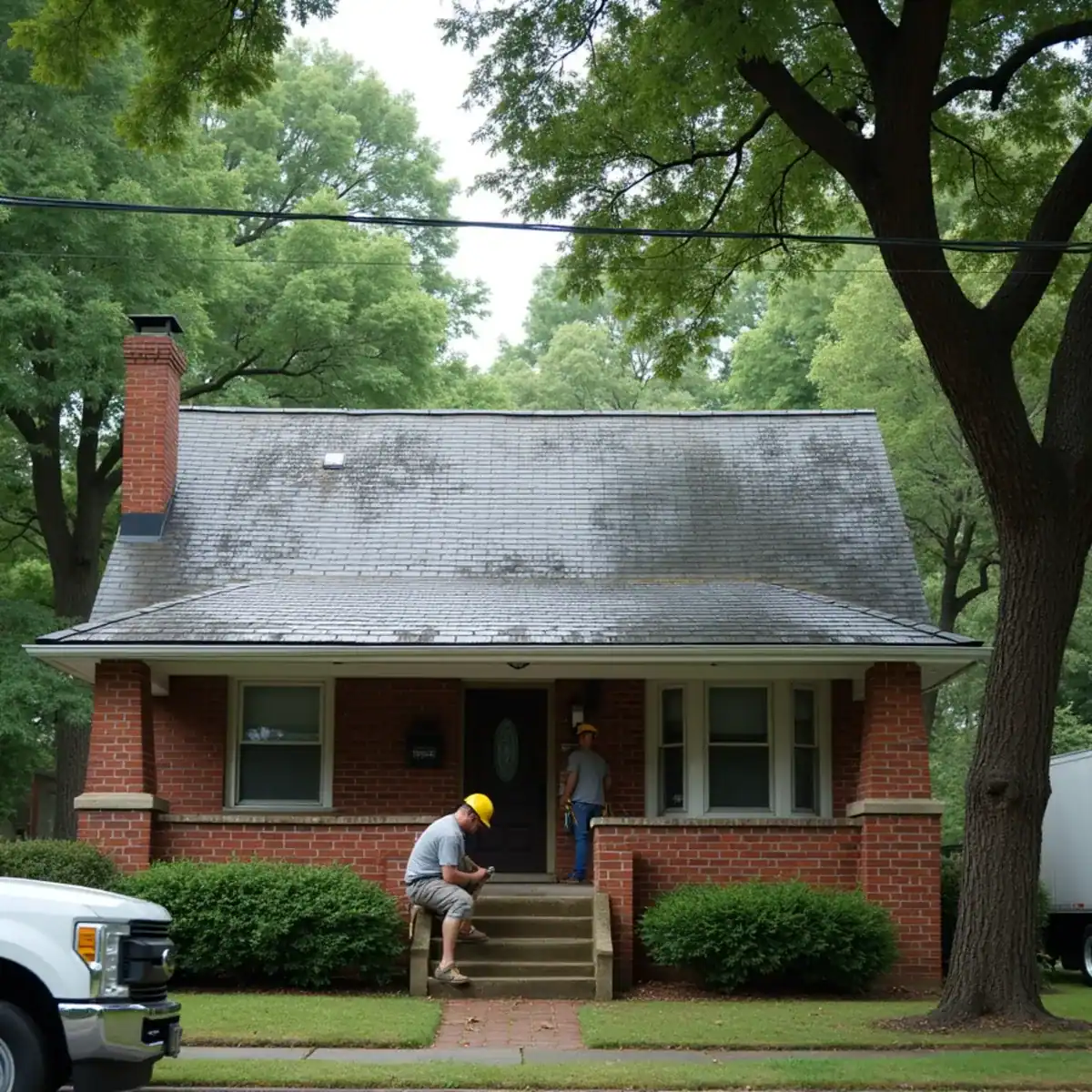
North Little Rock sits directly across the Arkansas River from downtown Little Rock, the shortest drive in our service area: about 5 to 10 minutes over the Broadway or Main Street bridge. Most calls start with a brown ring on a ceiling, water at the base of a chimney, or an oak limb on the shingles.
Little Rock Shingle Roofers answers 24/7 and connects you with an independent licensed roofer who traces the leak and puts the price in writing before work starts. About 64,500 people live here, many in older neighborhoods under big oaks.
Older North Little Rock roofs: chimneys, valleys and plank decking
Park Hill was laid out starting in 1922 and filled in through the 1950s; Lakewood followed with mid-century houses around its lakes. That gives North Little Rock a roof profile unlike a newer suburb.
Masonry chimneys with tired flashing
Over decades, step and counter flashing rust or pull loose, mortar joints open, and water runs down the brick behind the shingles. Many chimneys here have been smeared with roofing cement more than once. Real chimney flashing repair means new metal cut into the mortar, not another coat of tar.
Steep valleys under mature oaks
Bungalows and Period Revival houses have steep, cut-up rooflines. Leaves pack the valleys every fall, a hard rain backs up under the shingle edges, and the same oaks drop limbs that crack shingles.
Boards instead of plywood
Many pre-war roofs sit on wide planks, which rot along the seams under a slow leak. Cutting out soft boards before re-shingling is the core of roof decking repair.
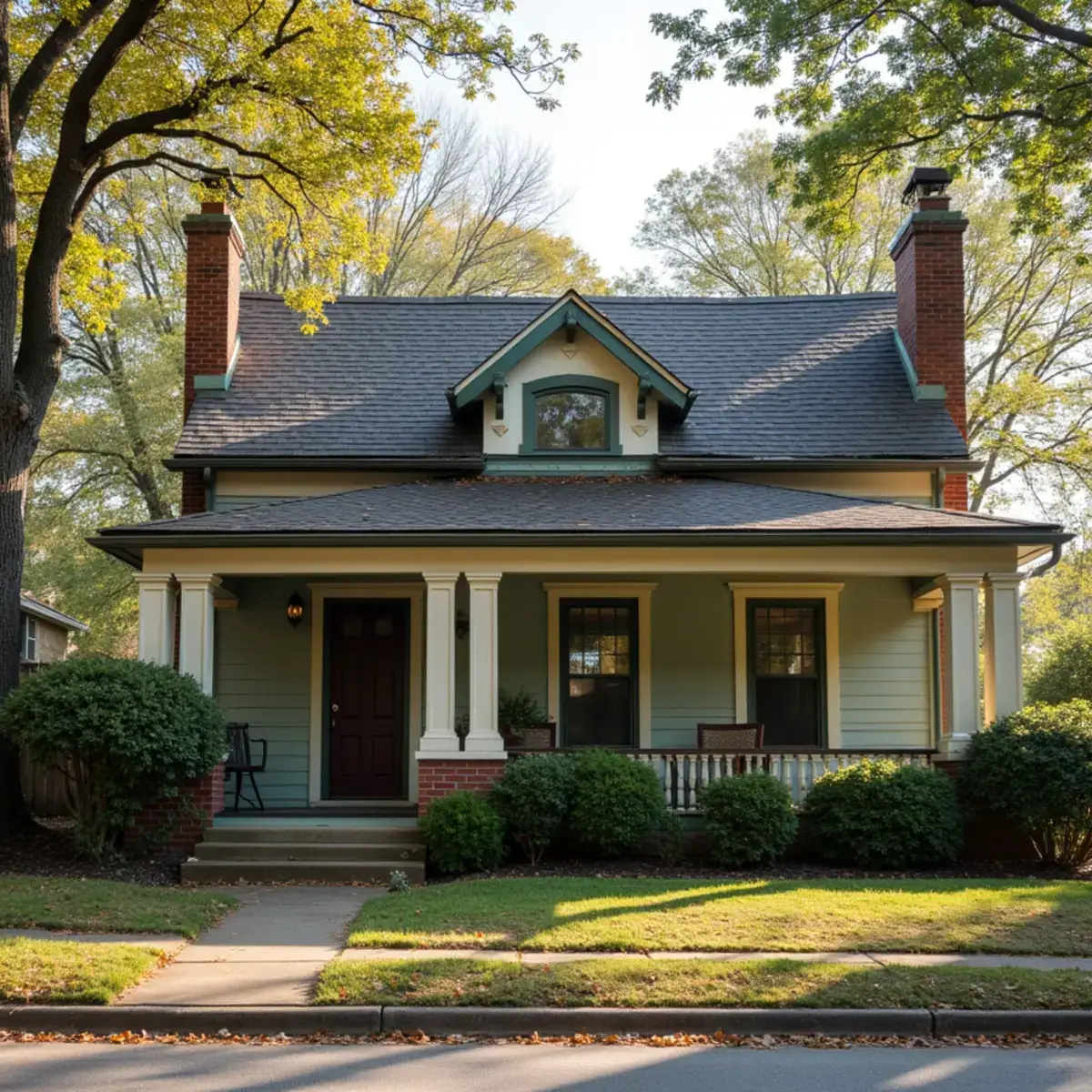
Where we take roof repair calls in North Little Rock
Calls come from Park Hill along JFK Blvd, the curving streets of Lakewood near the Old Mill, Indian Hills, and the neighborhoods off McCain Blvd. On the west side, Levy and Amboy spread along Pike Ave and Camp Robinson Rd. Near the river, Argenta sits a few blocks from Simmons Bank Arena, with Baring Cross and Rose City close by. Burns Park's woods show how many trees hang over roofs here.
Example job (illustrative)
Illustrative example, not a specific customer: a Park Hill homeowner sees a damp patch beside the chimney after every heavy rain. In the attic, the roofer finds water tracking down the brick and darkened planks below. The step flashing has rusted through, and the counter flashing was only caulked to the brick. The repair: new step flashing woven into the shingles, counter flashing cut into the mortar, two soft planks swapped out, and photos of each stage.
Argenta, Baring Cross and Rose City: small roofs, old details
The river-side neighborhoods are among the oldest in the city. Houses tend to be smaller, with low porch roofs and additions from different decades, and leaks start where those pieces meet a wall.
The roofer fixes the junction itself and matches the shingles as closely as a faded roof allows. If water has reached a ceiling, see what to do when the roof is leaking.
Roof repairs inside the Argenta Historic District
Part of Argenta is a local historic district, not just an old neighborhood. Its residential side is centered on Willow Street, and most of the houses there are Craftsman, with plain Colonial Revival homes mixed in. The district has been on the National Register of Historic Places since 1993.
North Little Rock's Historic District Commission requires a Certificate of Appropriateness before changes to the exterior of a building in the district. Applications go to a public hearing at the Commission's monthly meeting, with a newspaper notice published two weeks ahead, and the building permit follows approval. That adds weeks, so it matters which kind of repair you need.
- Matching what is already there: a few shingles in the same color, new step flashing around an existing chimney, or a soft plank swapped out under the same roof covering.
- Changing how the roof looks: a different material or color, taking down a chimney, or boxing in open eaves. These are the jobs most likely to need review.
Ask the Commission staff before any repair that changes appearance; they decide what needs a hearing, not the roofer. An active leak still gets stopped first with a temporary tarp, and the roofer we send photographs the existing details so the permanent roof leak repair can match them.
Neighborhood by neighborhood: what fails on North Little Rock roofs
North Little Rock grew by absorbing whole towns and subdivisions, each built in its own decade. Baring Cross was a railroad workers' town annexed in 1905; Park Hill, Levy and Rose City came in with the big annexations of 1946. Knowing when a street was built tells the roofer where to look first.
| Neighborhood | When it was built | What the roofer often finds |
|---|---|---|
| Baring Cross | Railroad town, incorporated 1896 | Leaks where porch roofs and additions meet the house, soft plank decking |
| Argenta (Willow St area) | Early 1900s, mostly Craftsman | Chimney flashing, rotted eave boards; check with the Commission first |
| Park Hill | Sales began 1922; 1920s bungalows and 1940s Minimal Traditional homes | Chimney flashing, water at the open eaves and rafter tails |
| Lakewood | Lakes finished 1932, houses from the late 1940s | Leaf-packed valleys and limb strikes under mature oaks |
| Amboy (Ranch Estates) | 1950s and later | Cracked pipe boots, nail pops on low-pitched roofs |
| Indian Hills | Started in the late 1950s | Pipe boots, lifted tabs, worn ridge and edge shingles |
| Rose City (Glenview, Delta Lawn) | Glenview 1956 to 1960, Delta Lawn 1961 | Pipe boots, wall flashing at later additions |
The older the street, the more likely the leak sits at a chimney, an addition or the roof edge rather than in the open field of shingles. On Park Hill's Craftsman bungalows, rot at the open eaves is usually fixed with roof decking repair along the edge plus new drip edge.
Shingle and leak repairs in North Little Rock, AR
- Flashing & Chimney Leaks in North Little RockRusted or caulk-only chimney flashing on Park Hill and Lakewood homes, rebuilt with new metal.About flashing & chimney leaks
- Roof Leak Repair in North Little RockLeaks traced from the attic and the roof, from leaf-packed valleys to sun-cracked pipe boots in Levy and Amboy.About roof leak repair
- Roof Decking Repair in North Little RockSoft or rotted planks cut out and patched on pre-war roofs, so new shingles go down on solid wood.About roof decking repair
- Emergency Roof Repair in North Little RockLimbs on the roof or water through the ceiling at night, handled once lightning and wind allow.About emergency roof repair
Why North Little Rock homeowners call Little Rock Shingle Roofers
Old chimneys, steep valleys and a short drive across the river.
- Across the river, not across the countyAbout 5 to 10 minutes from central Little Rock. That is a drive estimate, not an arrival promise; timing depends on the hour, the weather and open calls.
- Flashing checked before shinglesOn older homes the roofer checks chimney and wall flashing before blaming shingles, with photos of what failed.
- Historic-district details respectedIn Argenta, the roofer matches existing shingles and flashing details and tells you when a repair would change the look, so you can ask the Historic District Commission first.
- Licensed, insured and in writingEvery roofer we send is licensed and insured in Arkansas. You get a written estimate before work starts.
Roof repair questions from North Little Rock homeowners
How fast can a roofer reach North Little Rock?
The phone is answered 24/7, and North Little Rock is our shortest drive: about 5 to 10 minutes from central Little Rock. Arrival is a separate question. It depends on the hour, the weather and how many calls are open, and no roofer climbs in lightning, high wind or on ice. If water is coming in, call right away.
Why do chimneys on older Park Hill homes leak so often?
Most Park Hill chimneys are brick and date to the 1920s or 1940s. Their flashing has outlived several roofs, and layers of caulk eventually crack, so water runs behind the shingles and shows up on a nearby wall. Our guide to chimney leaks in older homes explains how flashing, crown and brick leaks differ.
Do you cover Levy, Amboy and Indian Hills?
Yes. Levy, Amboy and Indian Hills are all part of our regular North Little Rock area, along with Park Hill, Lakewood, Argenta, Rose City and Baring Cross. Every call from those neighborhoods also gets a live answer 24/7, an independent licensed roofer, and a written estimate before any work begins.
Can a leak be repaired without replacing my whole roof?
Usually, yes. Most leaks come from one spot: a chimney, a valley, a cracked pipe boot or a few broken shingles. The roofer fixes that spot and looks over the rest. If the shingles are worn out everywhere, you will hear that plainly, and a full-roof decision is a separate conversation. Our roof leak repair page shows how a leak is traced.
Is a tree limb on my North Little Rock roof an emergency?
Usually, yes, if it has broken through shingles or water is getting in. Stay off the roof and out of the room below, leave the limb in place, and take photos from the ground. Once it is safe, the roofer removes the limb, dries in the opening and quotes the permanent fix, as our emergency roof repair page explains.
What should I check before a roof repair in the Argenta Historic District?
Check whether the repair changes how the house looks. North Little Rock's Historic District Commission requires a Certificate of Appropriateness before exterior changes in the district, and a different roofing material, a removed chimney or enclosed eaves all count as exterior changes. Call the Commission staff first if you are unsure. A tarp over an active leak is temporary, so stopping the water does not have to wait.
Why do older North Little Rock bungalows show leaks at the eaves first?
Many 1920s bungalows in Park Hill and Argenta have open eaves with exposed rafter tails and no soffit, so the underside of the roof boards is visible from the ground. Water that gets in at the roof edge stains or softens those boards where you can see them. A dark patch under the eave usually means a failed drip edge or rotted edge shingles, a small repair if it is caught early.
Page reviewed by Little Rock Shingle Roofers.