Quick answer
Most chimney leaks in older Little Rock homes start at the flashing where the roof meets the brick: counter flashing pulled out of eroded mortar, missing step flashing or no cricket behind a wide chimney. Cracked crowns and porous brick cause the rest. Flashing leaks stain the ceiling beside the chimney; crown and brick leaks often show in the firebox.
A chimney leak in a Little Rock home almost always traces to one of three places: the metal flashing where the shingles meet the brick, the mortar crown on top, or the brick and mortar joints themselves. On older houses, flashing is the most common cause by a wide margin. Where the water shows up inside, and in what kind of rain, narrows it down fast.
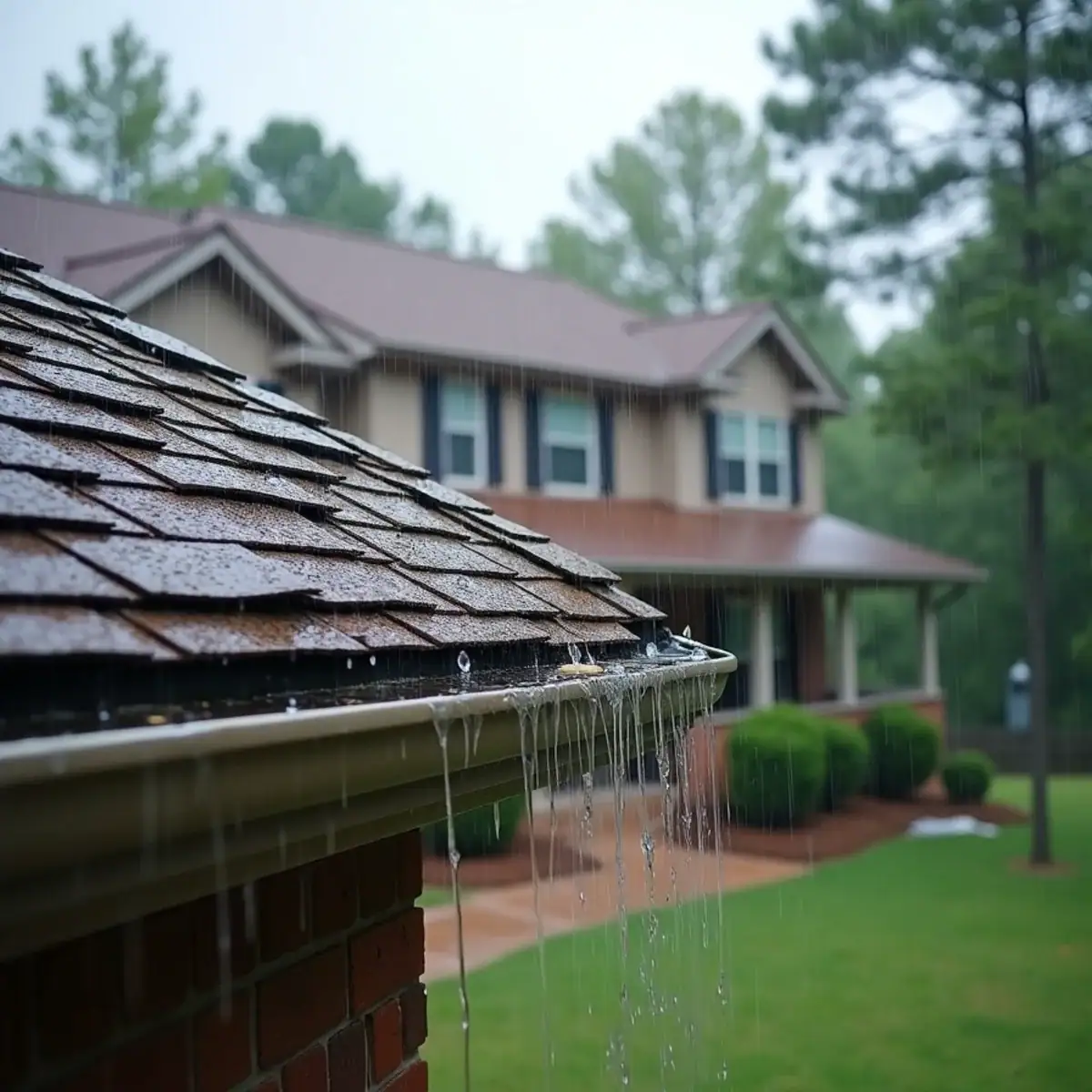
Pre-war homes in Hillcrest, the Heights and the Quapaw Quarter, and in Park Hill across the river in North Little Rock, often still have their original masonry chimneys on steep, cut-up roofs. Those roofs are on their second, third or fourth set of shingles, and at each reroof the chimney flashing may have been reused, bent back or covered in tar. Add about 50 inches of rain a year in heavy bursts, and the chimney becomes the first place an old roof lets water in.
How a chimney is supposed to shed water
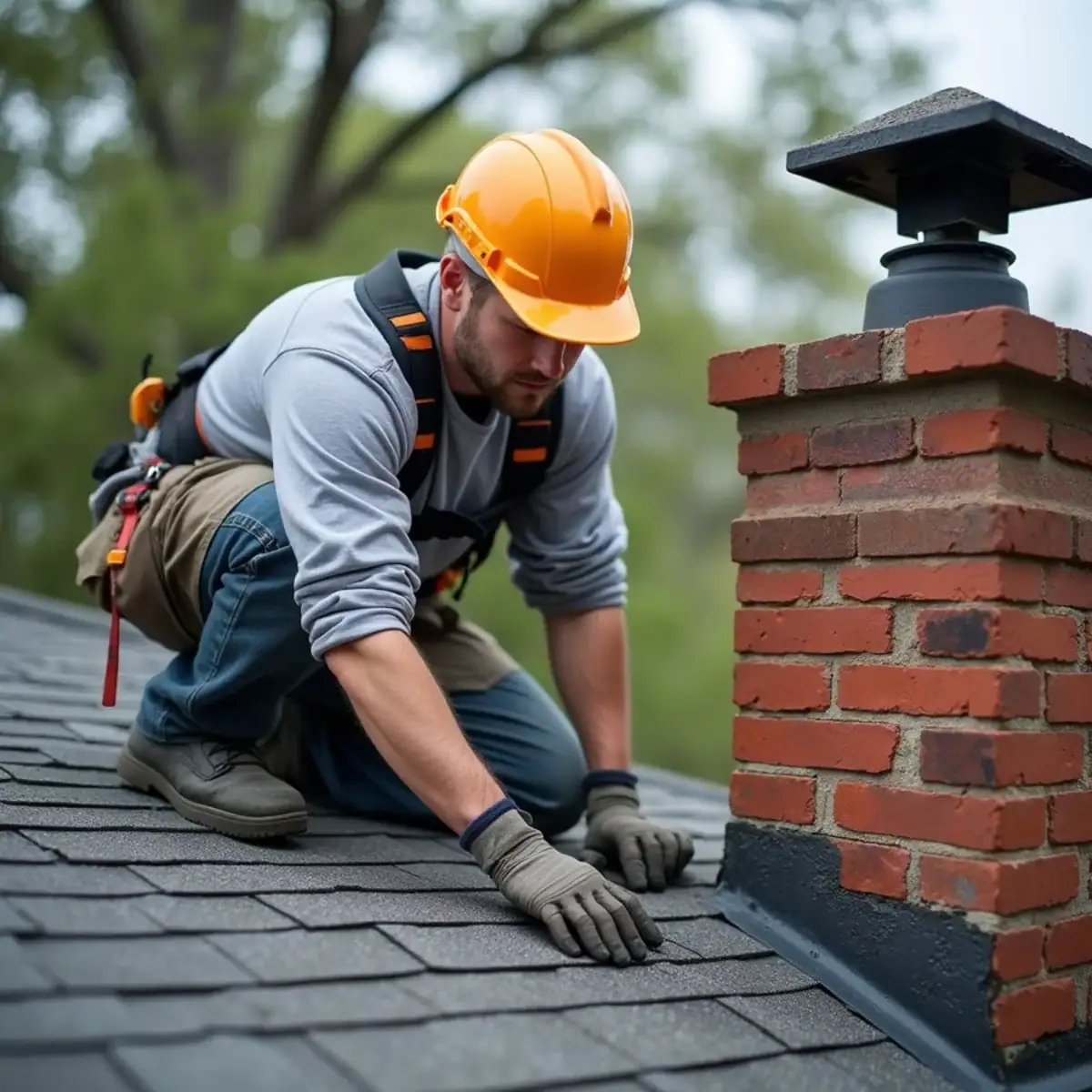
A chimney is a big masonry box punched through the roof, and it moves differently from the wood around it. The flashing has to bridge that gap while letting both sides shift. A properly built chimney has these layers:
- Step flashing: L-shaped metal pieces woven in with each course of shingles up both sides of the chimney.
- Counter flashing: metal set into a mortar joint in the brick and bent down over the step flashing, so water running down the brick lands on the roof.
- Apron flashing: a single piece across the downhill face of the chimney.
- Back pan or cricket: a small peaked roof behind the chimney that splits water and leaves around it instead of letting them pile up.
- Crown and cap: a sloped concrete or mortar top that sheds water away from the flue, plus a metal cap that keeps rain out of the flue.
A leak means one of those layers is missing, broken or was never there.
Flashing leaks: the usual cause on older roofs
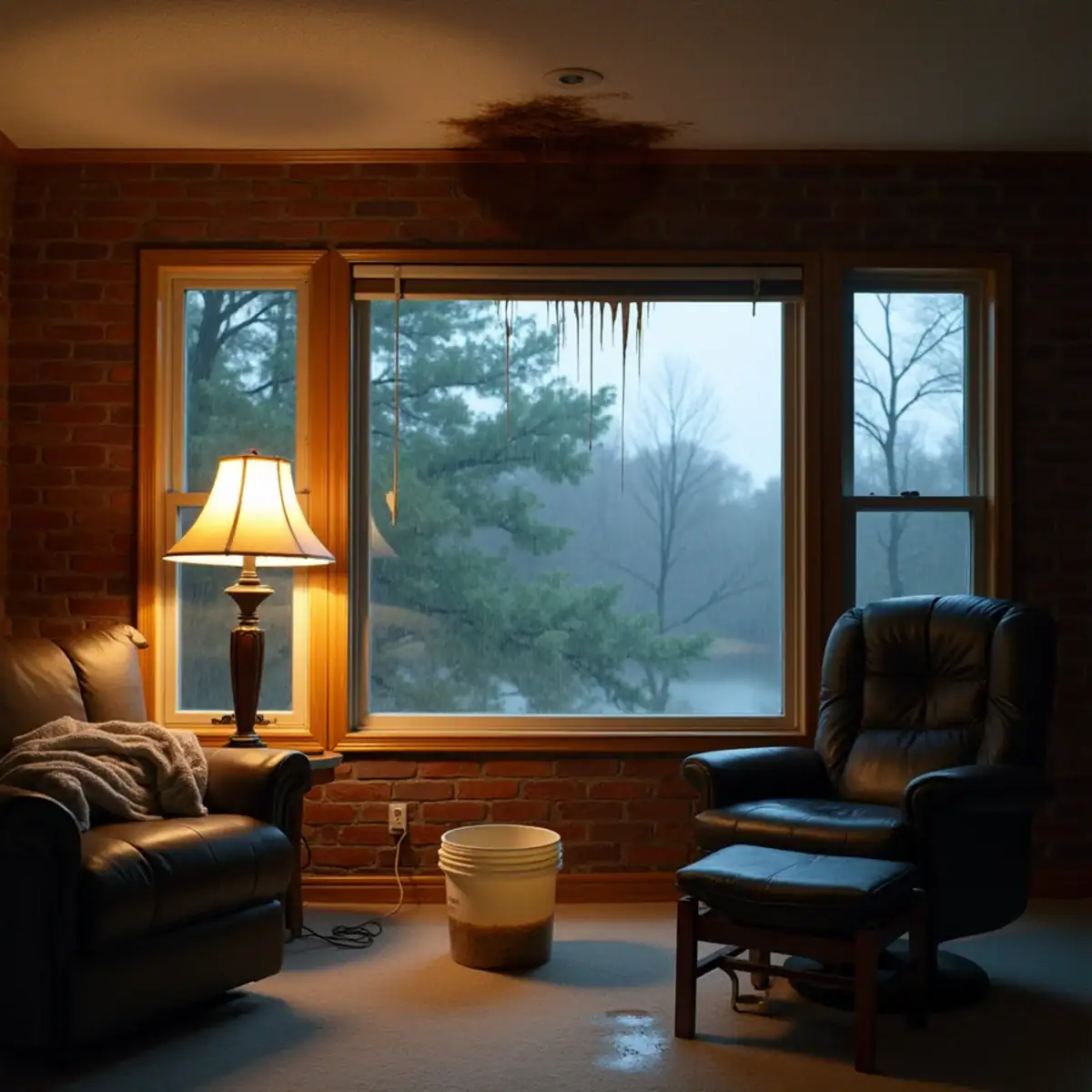
Flashing leaks show up as a stain on the ceiling or wall right beside the chimney, or as wet framing next to the brick when you look from the attic. They are worst in heavy or wind-driven rain, when water hits the side of the chimney hard and runs into any gap.
What goes wrong
- The mortar joint holding the counter flashing has eroded, and the metal has pulled loose from the brick.
- A past reroof skipped the step flashing and ran shingles up to the brick with a bead of caulk instead.
- Old galvanized flashing has rusted through, often hidden under layers of roofing cement.
- There is no cricket behind a wide chimney, so oak leaves and pine needles build a dam that holds water against the brick.
Building codes commonly call for a cricket behind chimneys wider than 30 inches, but many older chimneys in Little Rock went up long before that rule and never got one. When the flashing is the problem, chimney flashing repair replaces the metal properly instead of adding another coat of tar. Our guide to roof leaks that only show up in heavy rain covers why a chimney can stay dry in a drizzle and pour in a downpour.
Crown cracks and missing caps
The crown is the slab across the top of the chimney. On many older chimneys it is a thin layer of mortar troweled on decades ago, and summer heat and winter cold have cracked it. Water goes through the cracks into the core of the chimney and works its way down.
Crown and flue leaks tend to show up inside the chimney rather than beside it: water in the firebox, rust on the damper, or damp, stained plaster on the chimney breast inside the house. A missing cap lets rain fall straight down the flue, which looks the same. These are usually jobs for a mason or a chimney sweep, though some roofers set caps.
The crown and the cap are separate parts, and a chimney can have one without the other. The crown is the masonry slab around the flue that sheds water off the brick. The cap is the metal hood over the flue opening, usually with a mesh screen that keeps out sparks, birds and squirrels. Hairline crown cracks can often be sealed with a flexible crown coating; a crown that is crumbling, badly cracked or holds puddles is usually rebuilt.
Brick and mortar that soak up water
Old brick and soft lime mortar are porous. During a long, soaking rain the chimney absorbs water like a sponge, and some of it wicks inward. Signs include eroded or sandy mortar joints, brick faces that have flaked off (called spalling), and white mineral deposits on the brick inside the attic.
The fix here is masonry work: repointing the joints with a mortar that suits the old brick, and replacing badly spalled units. Some masons also apply a breathable water repellent, usually a silane or siloxane product that soaks into the brick and still lets water vapor out. Avoid paint or any coating that seals the brick tight, since it traps moisture inside and can make spalling worse.
The white deposits, called efflorescence, are salts left behind as water moves through the masonry and dries. They prove water is passing through, not where it came from. A patch that stays damp a week after the last rain points to a source inside the chimney, such as condensation in the flue, rather than rain on the brick face.
Telling the three apart
| What you see | Likely source |
|---|---|
| Stain on the ceiling or wall beside the chimney after heavy rain | Step, counter or apron flashing |
| Leak only when rain blows from one direction | Flashing on that side of the chimney |
| Leak behind the chimney that worsens after leaf drop | No cricket, or a debris dam behind the chimney |
| Water in the firebox or on the damper | Cracked crown, missing cap or flue problem |
| Damp brick with white deposits in the attic during long rains | Porous brick or eroded mortar joints |
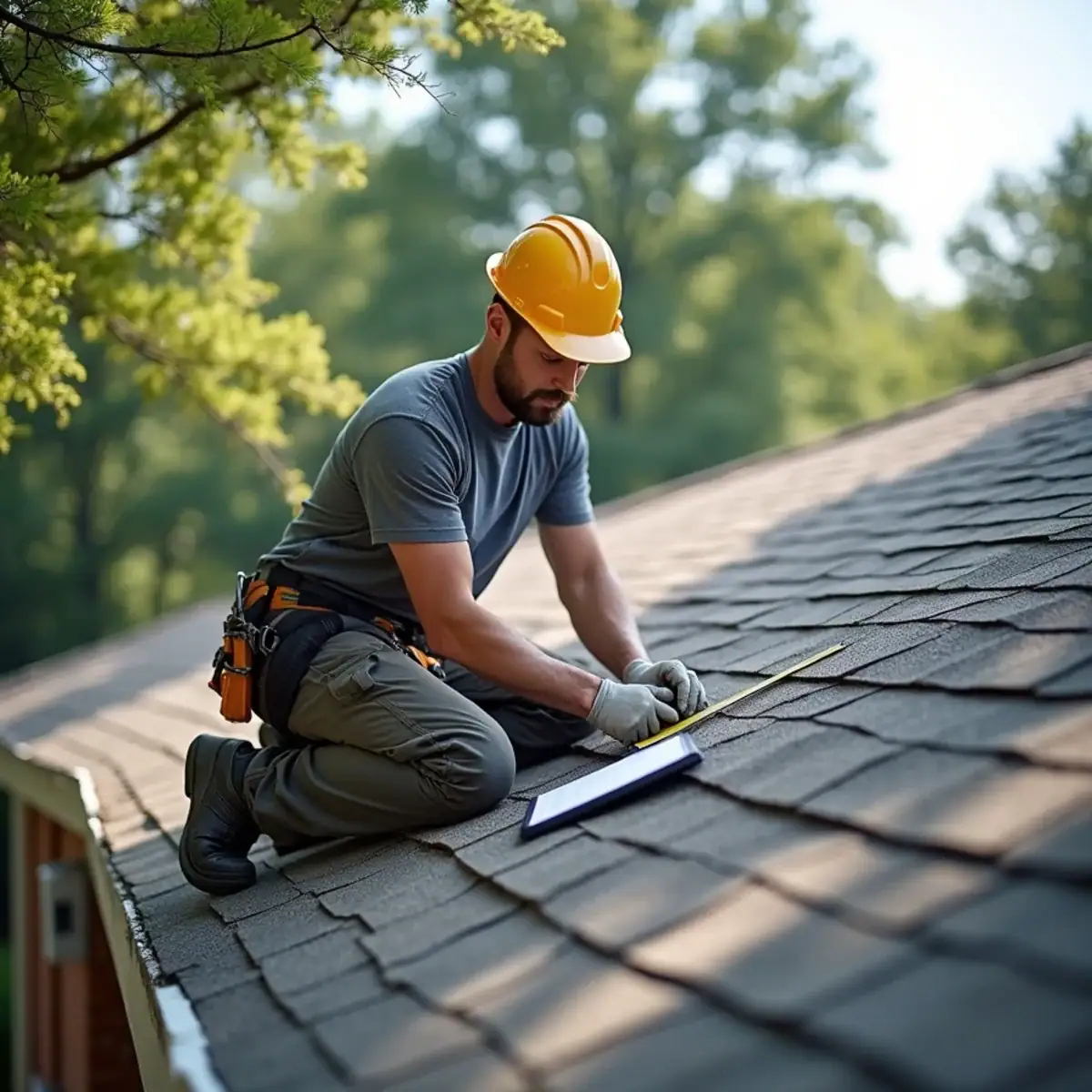
A roofer confirms the source from the attic first, then on the roof, and sometimes with a hose test in stages: flashing first, then the brick face, then the crown. Testing one part at a time keeps everyone from paying for the wrong fix. A thorough roof leak repair visit should end with a clear answer on which part failed.
What if the chimney is old, unlined or no longer used?
Plenty of pre-war houses in Hillcrest, the Heights and the Quapaw Quarter have a chimney that hasn't held a fire in decades. Some were built without a clay flue liner. Sitting unused doesn't keep rain out: an open flue still takes water straight down the inside, where it soaks the smoke shelf and the brick behind the plaster, and the first sign is often a damp, musty patch on the chimney breast.
- Cap it. A metal cap with a screen keeps rain and animals out of a flue you don't use. An unlined flue should still breathe, so the top is covered, not sealed airtight.
- Take it down below the roofline. If nothing vents into it, some owners have a mason remove the part above the roof. A roofer then closes the hole with new decking and shingles, the same work as a roof decking repair, and the roof has one less place to leak.
Check what still uses the flue
Before anyone caps, seals or removes a chimney, confirm that no furnace, water heater or gas log set vents into it. Older houses sometimes have a gas appliance tied into a flue that looks abandoned, and closing it off can push carbon monoxide into the house. A chimney sweep can confirm it.
When the chimney needs a mason and a roofer, who goes first?
The masonry goes first, almost every time. New flashing is only as good as the brick and mortar it is set into, so flashing a chimney with loose brick or crumbling joints means doing it twice. A typical order looks like this:
- Masonry repairs. The mason resets loose brick above the roofline, repoints soft joints and seals or rebuilds the crown.
- Let the mortar cure. Fresh joints need time to harden before a roofer cuts a groove in them for counter flashing. The mason will say how long.
- Flashing and cricket. The roofer installs step flashing, counter flashing and, where the chimney is wide, a cricket against the finished masonry.
- Cap and water repellent last. A repellent goes on clean, dry, cured brick, never right after a soaking rain.
Masonry work and repellents need a dry stretch, so a run of spring downpours can push the schedule back. Late summer and early fall are a good window in Little Rock: the brick has dried out and the work is done before fireplace season. If it is leaking now, a temporary seal holds until the work can follow in that order.
What roofers find on Hillcrest and Heights chimneys
The most common sight on an old Little Rock chimney is years of patches stacked on each other: black roofing cement troweled over the flashing, then caulk over the cement, then more cement. Each patch worked for a season. Underneath, the metal is often rusted through and the counter flashing is no longer tucked into the brick at all. Tar hides the problem and holds water against the metal.
The repair that lasts is to strip it back, weave new step flashing in with the shingles, and cut a fresh groove in a mortar joint so new counter flashing can be set into the brick and sealed. On steep, cut-up roofs the chimney often sits mid-slope or against a dormer, so its back side catches a lot of water and leaves, and adding a cricket matters as much as the flashing. Park Hill homes across the river have the same chimneys and the same problems, which is why roof repair in North Little Rock involves so much chimney work.
One caution: if the brick above the roof is loose or the chimney has started to lean, new flashing will not hold. A mason needs to rebuild that part first, and an honest roofer will tell you before taking the job.
Quick answers
Can roofing cement fix a chimney leak?
No, not for long. Roofing cement or caulk smeared over chimney flashing can stop a drip for a season, but Arkansas heat dries it out and the chimney and roof move at different rates, so it cracks. It also hides rusted metal underneath. A lasting repair replaces the step and counter flashing and sets the counter flashing into a mortar joint in the brick.
Should I call a roofer or a mason for a leaking chimney?
It depends on where the water gets in. If the stain is on the ceiling or wall beside the chimney, start with a roofer, since flashing is the usual cause. If water is in the firebox, on the damper, or the brick is crumbling, call a mason or chimney sweep. Many leaks on older chimneys need a bit of both, and a good roofer will say so.
Does every chimney need a cricket?
Not always. Narrow chimneys, or chimneys sitting at the very top of a roof, can shed water fine with a proper back pan. Building codes commonly call for a cricket behind chimneys wider than 30 inches, and on steep Little Rock roofs under oaks and pines, a cricket also keeps leaves from piling up behind the brick and holding water there.
Will a chimney cap stop my chimney leak?
Not always. A cap stops rain from falling straight down the flue, so it fixes leaks that show up as water in the firebox or a rusted damper. It does nothing for a stain beside the chimney, which is usually flashing, or for water soaking through a cracked crown or porous brick. Match the fix to where the water shows up.
Should I seal my brick chimney to stop leaks?
Not always. A breathable silane or siloxane repellent can help old brick shed rain, but only after the flashing, joints and crown are repaired, since it fixes none of those. Skip paint and film-forming sealers, which trap moisture and make brick flake.
Fix the right part of the chimney
Older Little Rock chimneys leak at the flashing far more often than through the brick, so start there, and do not settle for another layer of tar. If water shows up in the firebox or the brick itself looks tired, bring in a mason too. To have a licensed roofer check the flashing on your chimney, call Little Rock Shingle Roofers at (773) 207-0769. We answer 24/7, and the roofer gives you a written estimate before any work starts.